Historical gallery

A wider visual record of the original iSuRRF Zero Waste work in Bali: people, process, produce, production, fabrication, buildings, maintenance and paperwork.

49 photographs numbered 1–49 · historical program era · not a current staff or partner directory

Use the number on each image when editing notes (e.g. “Image 18: …”).

The main article uses a curated set of ten images. This page holds the broader archive. Photographs are historical; they do not invent names or imply current endorsement. For product identity of iSuRRF™ 2026, see the Legal Notice.

People

Operators, teams and the human capability that made Zero Waste operational.

Landscape· 6 · 2 across · nos. 1–6

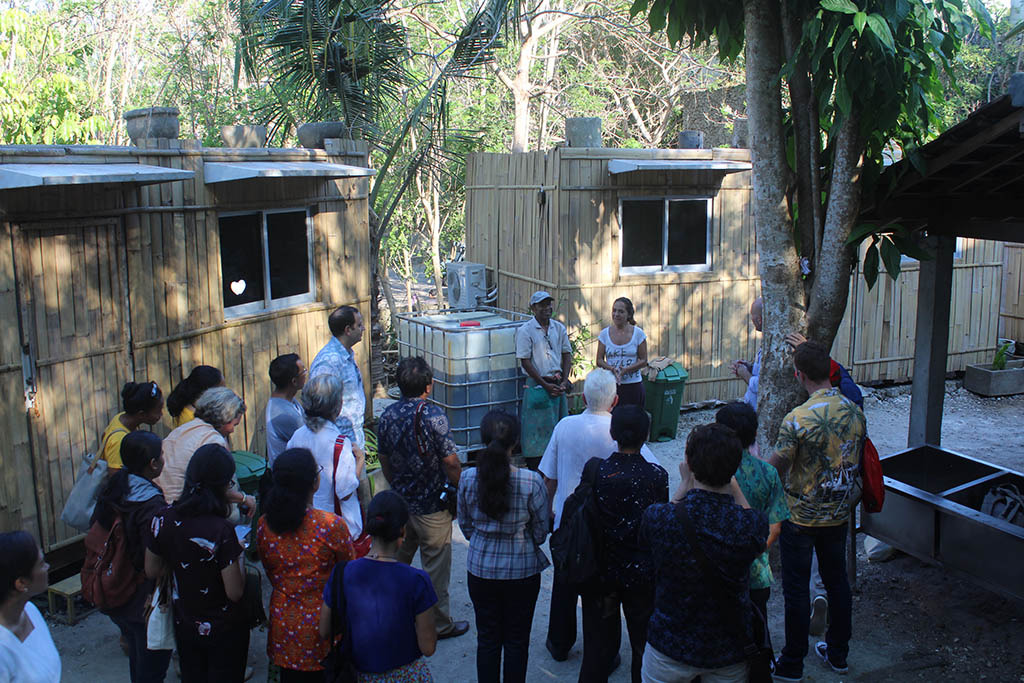
  • Image 1. Visitors listening during a tour of bamboo recovery facilities1
    1.A facility tour: infrastructure and people shown together.
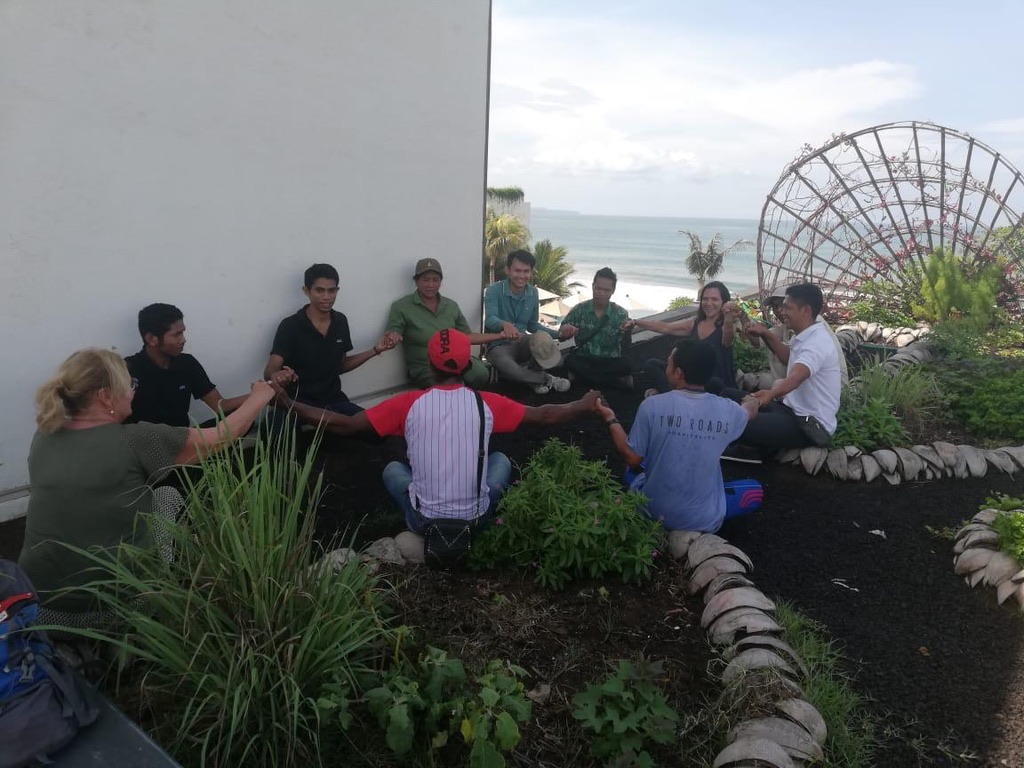
  • Image 2. Team sitting in a circle holding hands in a rooftop garden overlooking the ocean2
    2.Team gathering on a rooftop garden above the coast.
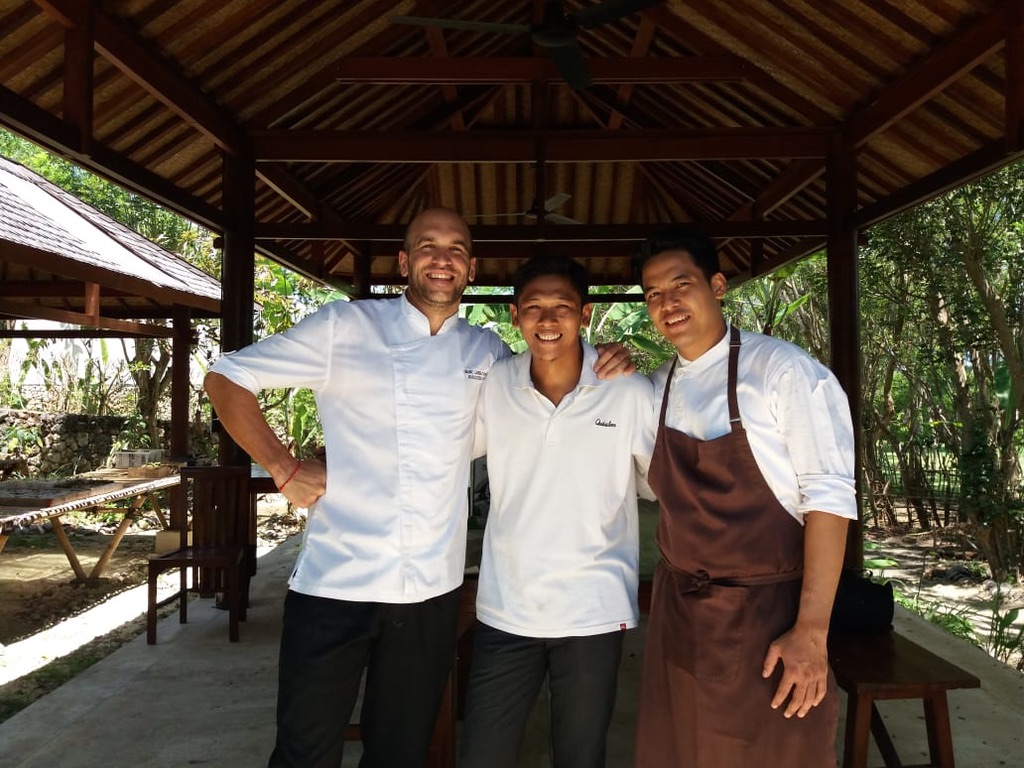
  • Image 3. Three kitchen and hotel team members under an open pavilion3
    3.Kitchen and hotel colleagues under a pavilion.
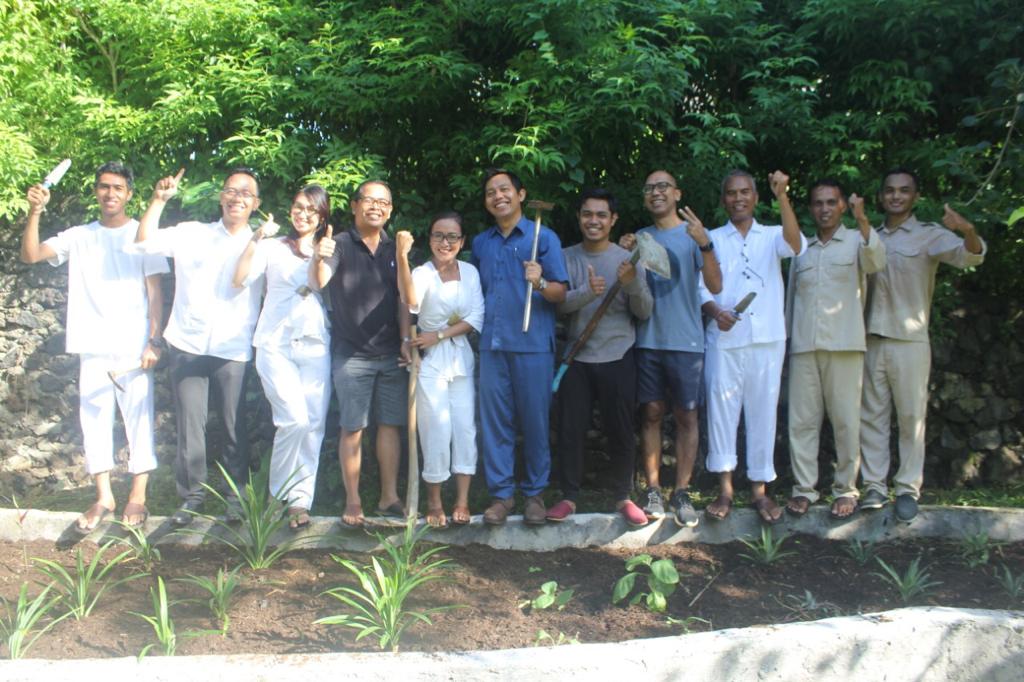
  • Image 4. Group of people with garden tools along a planted bed4
    4.Planting and garden work as a group activity.
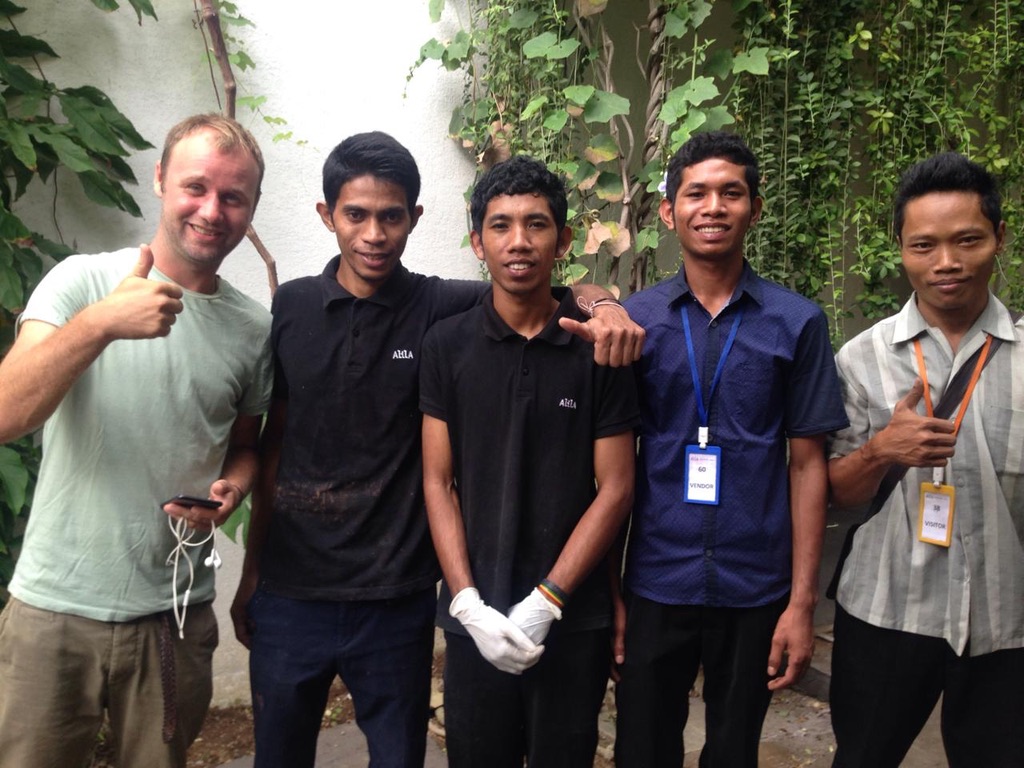
  • Image 5. Five people outdoors including hotel-branded shirts and visitor badges5
    5.Hotel operations staff and visitors on site together.
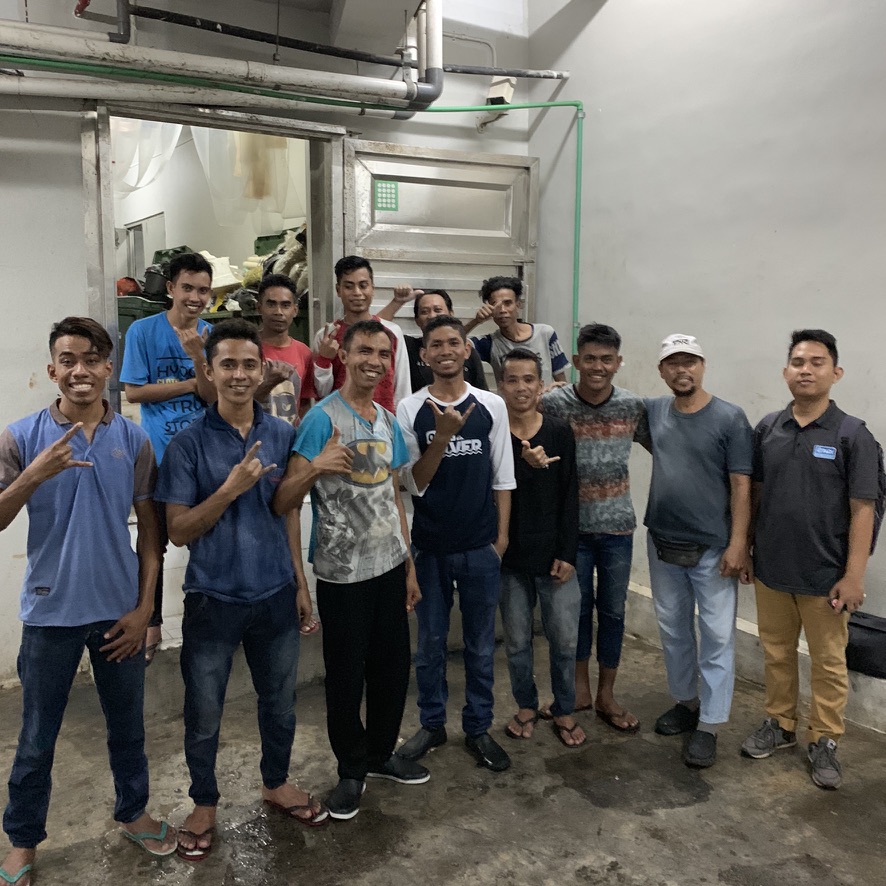
  • Image 6. Large group of recovery operators posed together in an indoor work area6
    6.Recovery team at the facility — the people who ran day-to-day operations.

Profile· 3 · 3 across · nos. 7–9

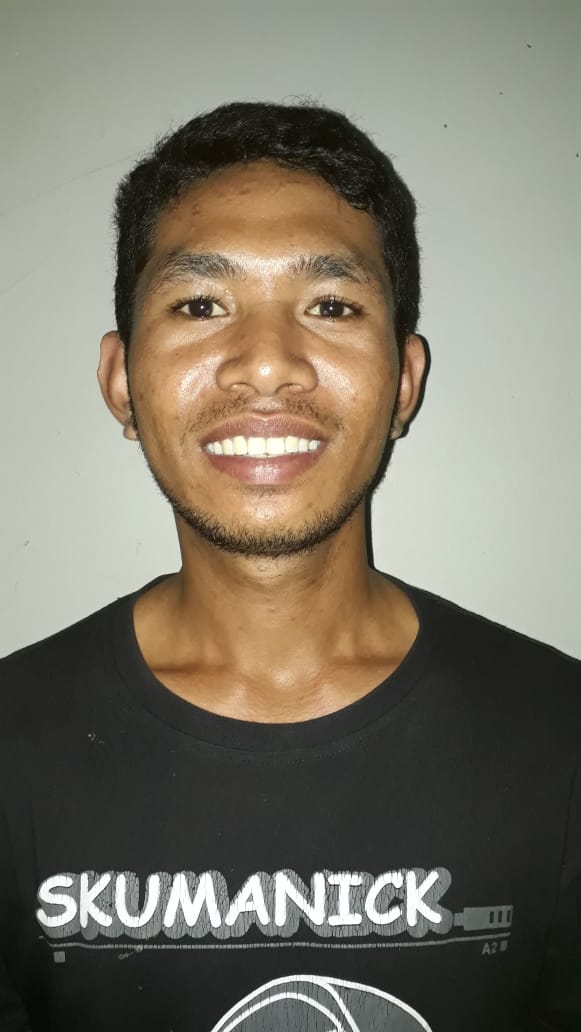
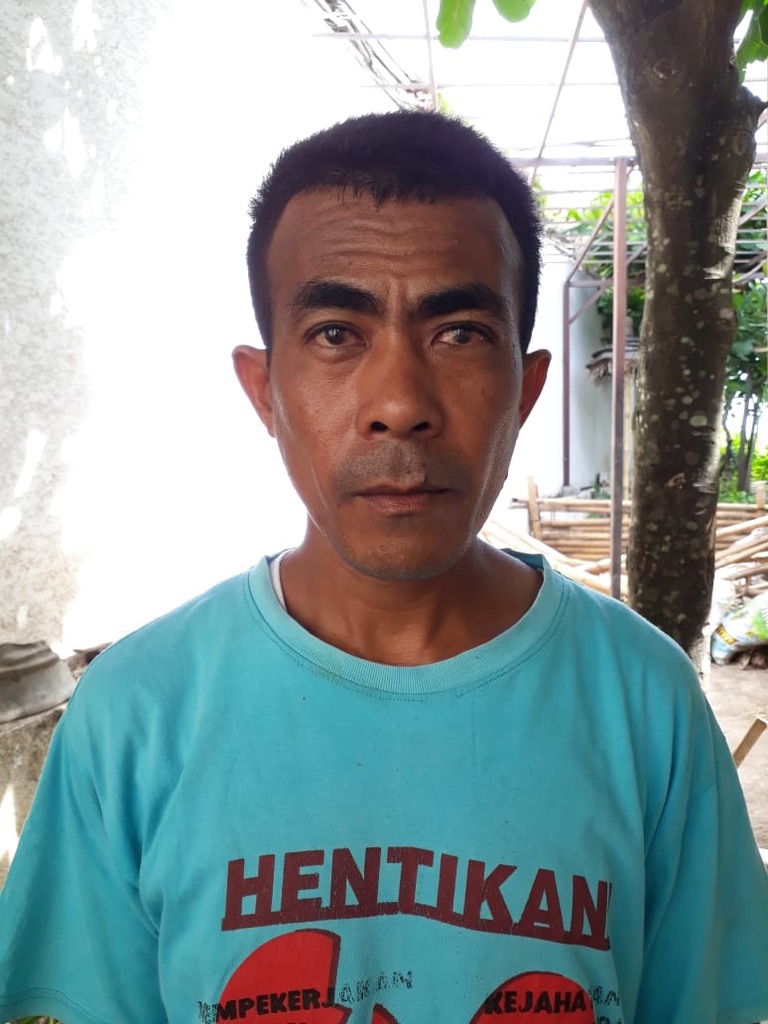
  • Image 7. Portrait of a recovery team member from the original program7
    7.Team member, original program era — one of the people who carried day-to-day capability.
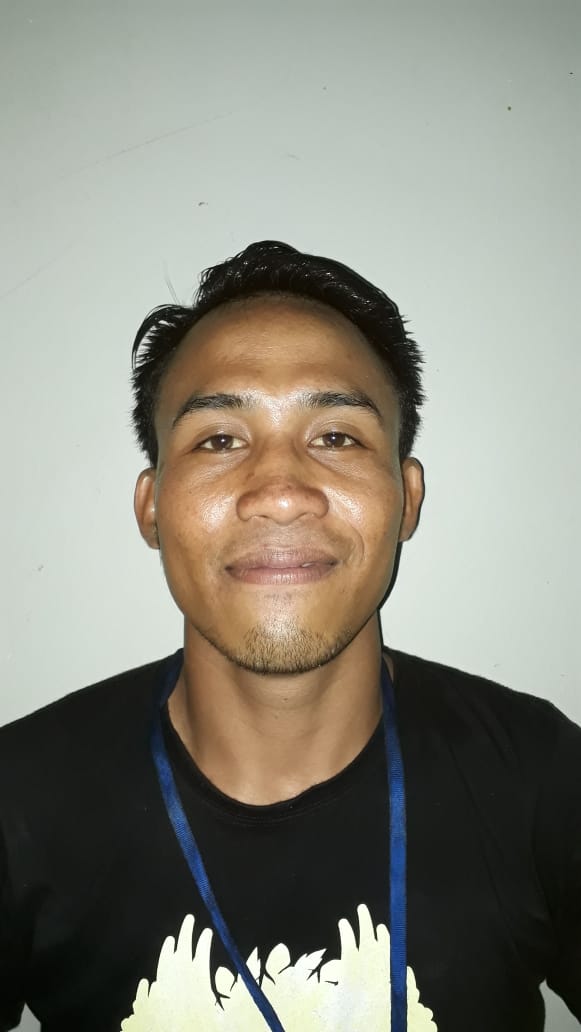
  • Image 8. Portrait of a recovery team member from the original program8
    8.Team member, original program era — practical skill and reliability in the operating system.
  • Image 9. Portrait of a recovery team member from the original program9
    9.Team member, original program era — the human centre of property-scale Zero Waste work.

Process

Source separation, wet streams, weighing and the ordinary discipline of recovery.

Landscape· 4 · 2 across · nos. 10–13

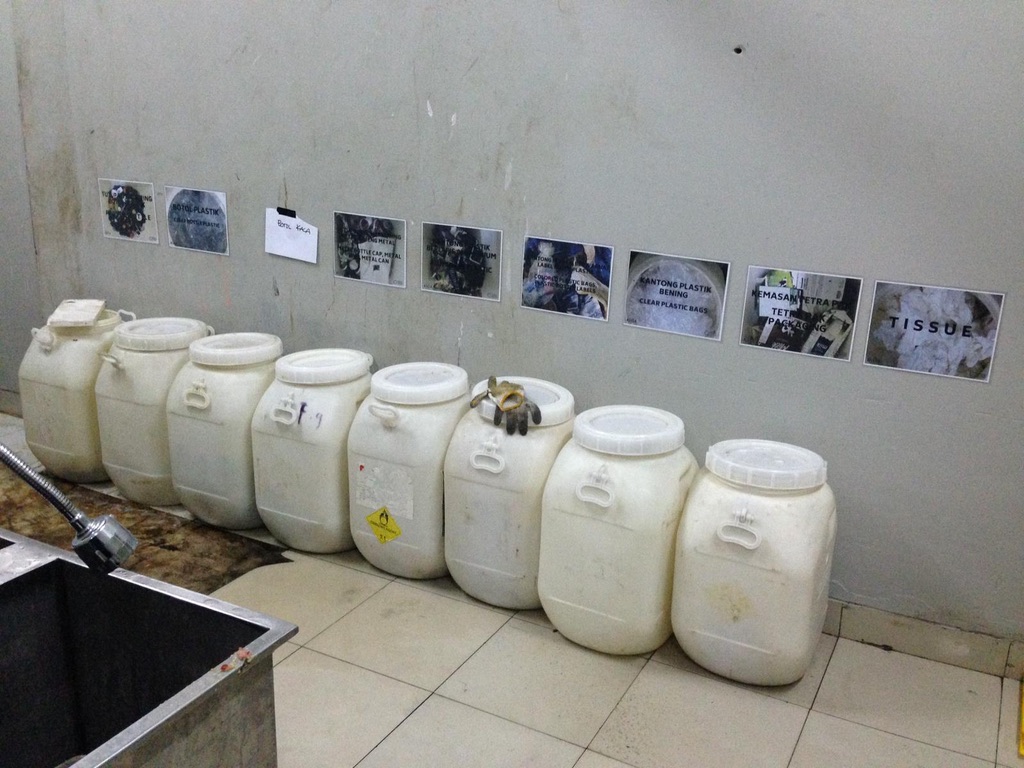
  • Image 10. White drums under wall labels with photographs of material streams10
    10.Source-separation drums with photo labels for each stream.
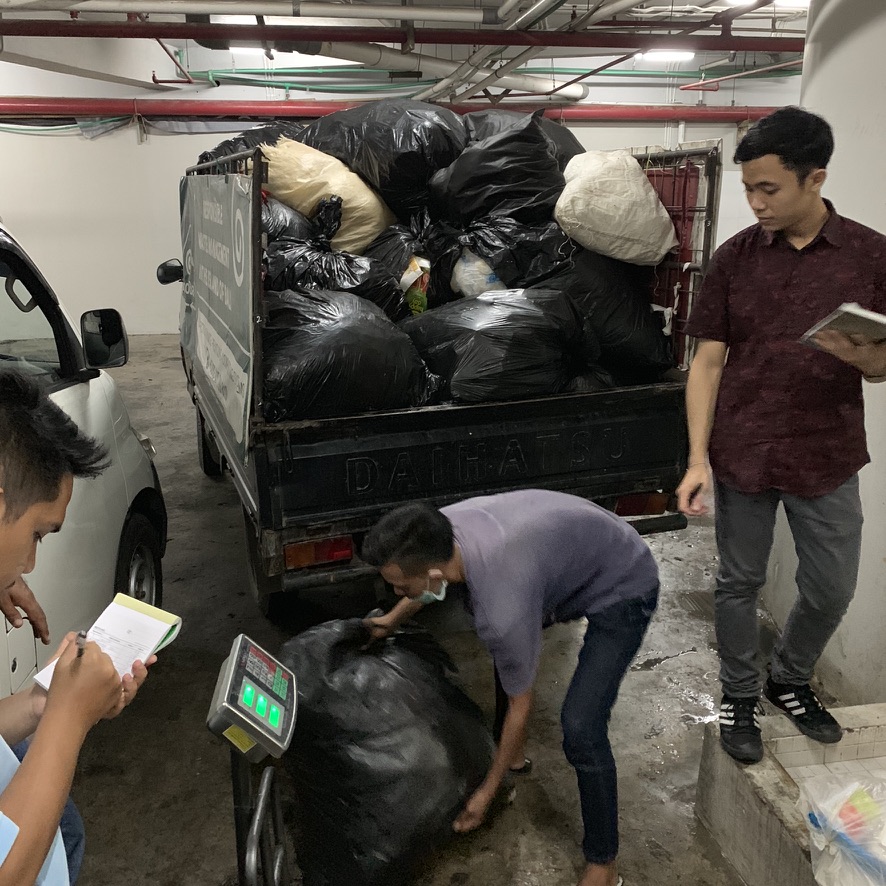
  • Image 11. Team weighing bags on a floor scale while a truck loaded with bags waits11
    11.Bags weighed on a floor scale before loading or despatch.
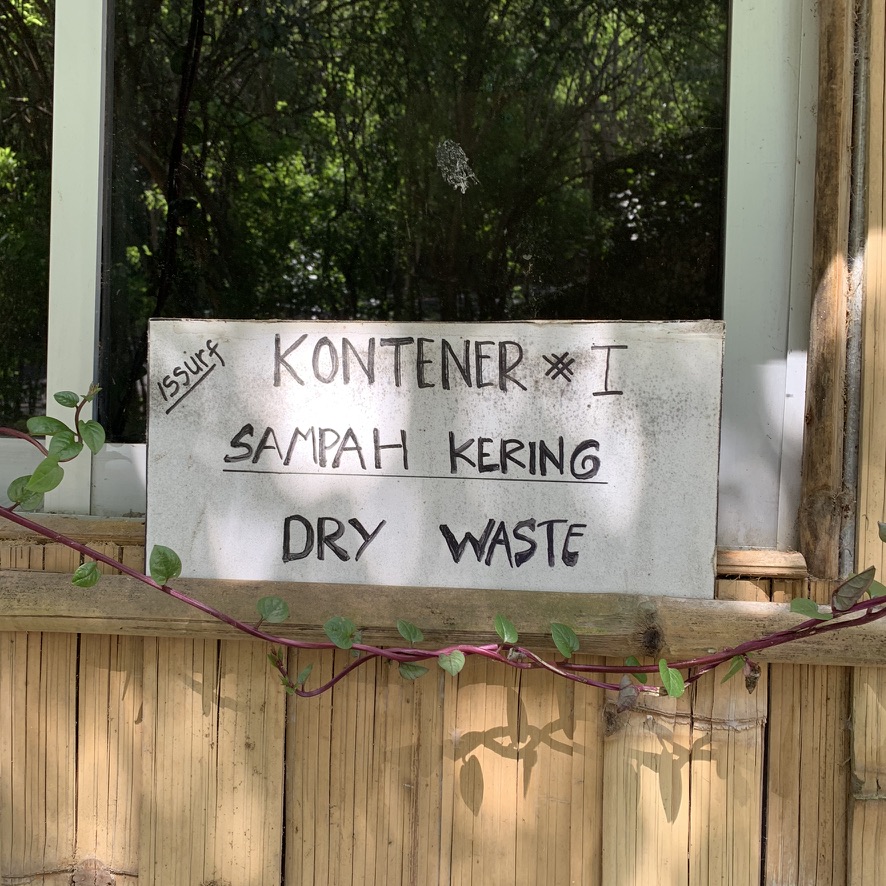
  • Image 12. Hand-painted sign: Kontener I Sampah Kering Dry Waste12
    12.Container I labelled for dry waste (sampah kering).
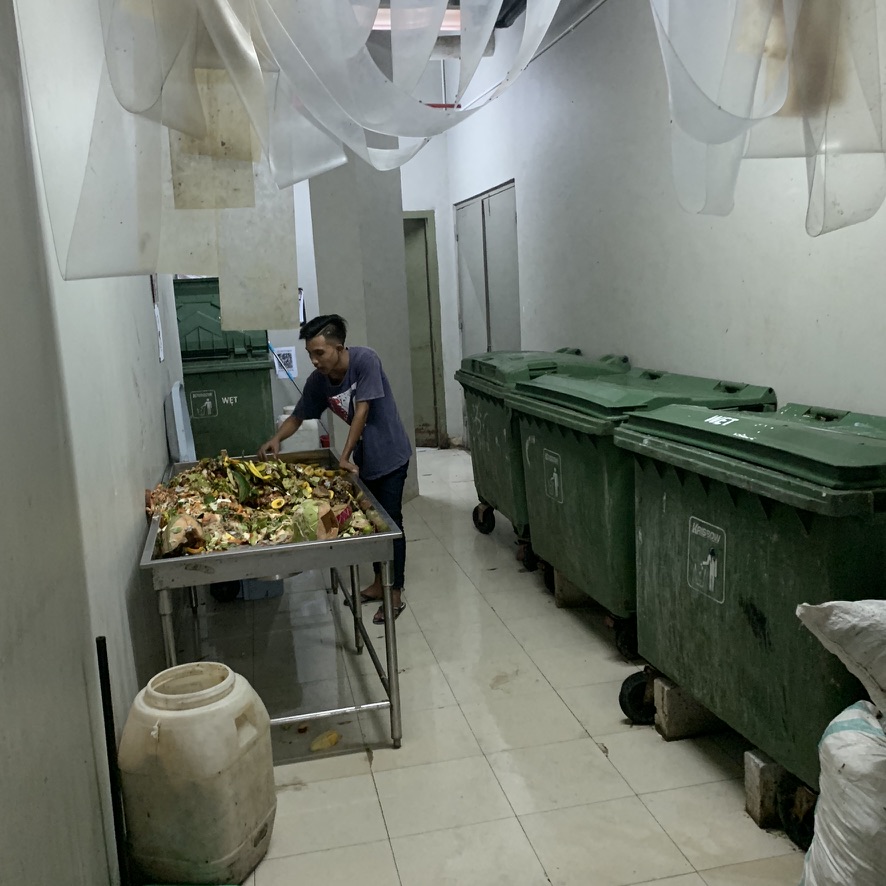
  • Image 13. Person sorting wet organics on a metal table beside green wet bins13
    13.Wet organics on a sort table beside wet-stream bins.

Profile· 3 · 3 across · nos. 14–16

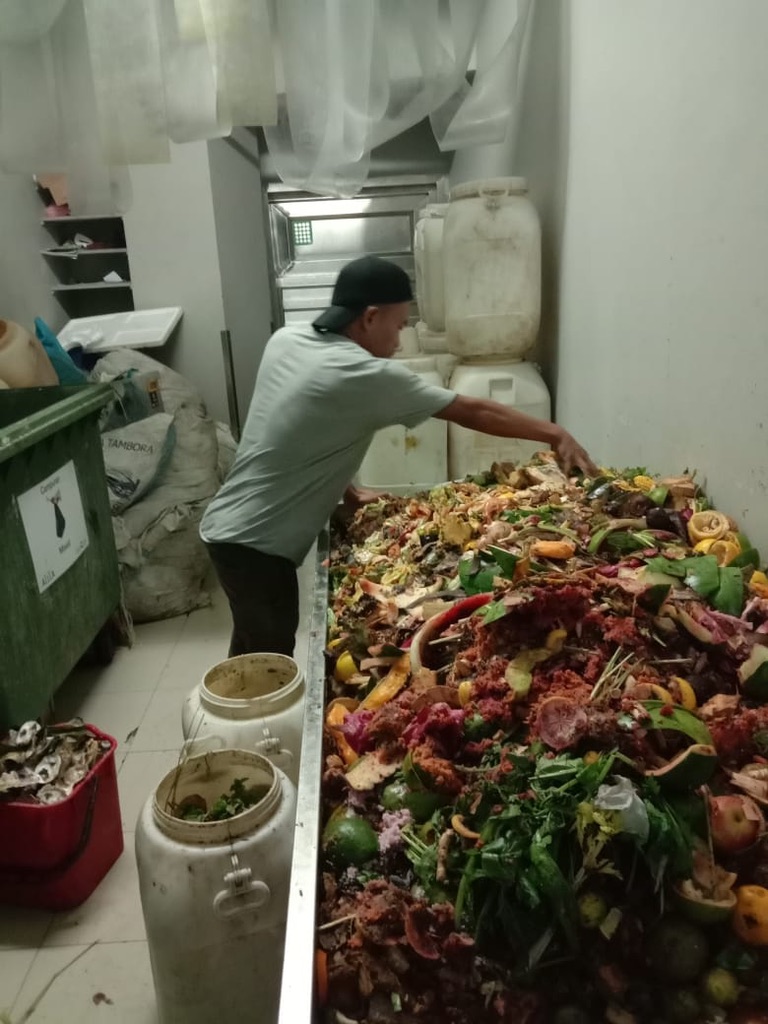
  • Image 14. Person working at a trough filled with mixed wet food organics14
    14.Wet food organics in a trough, handled before further processing.
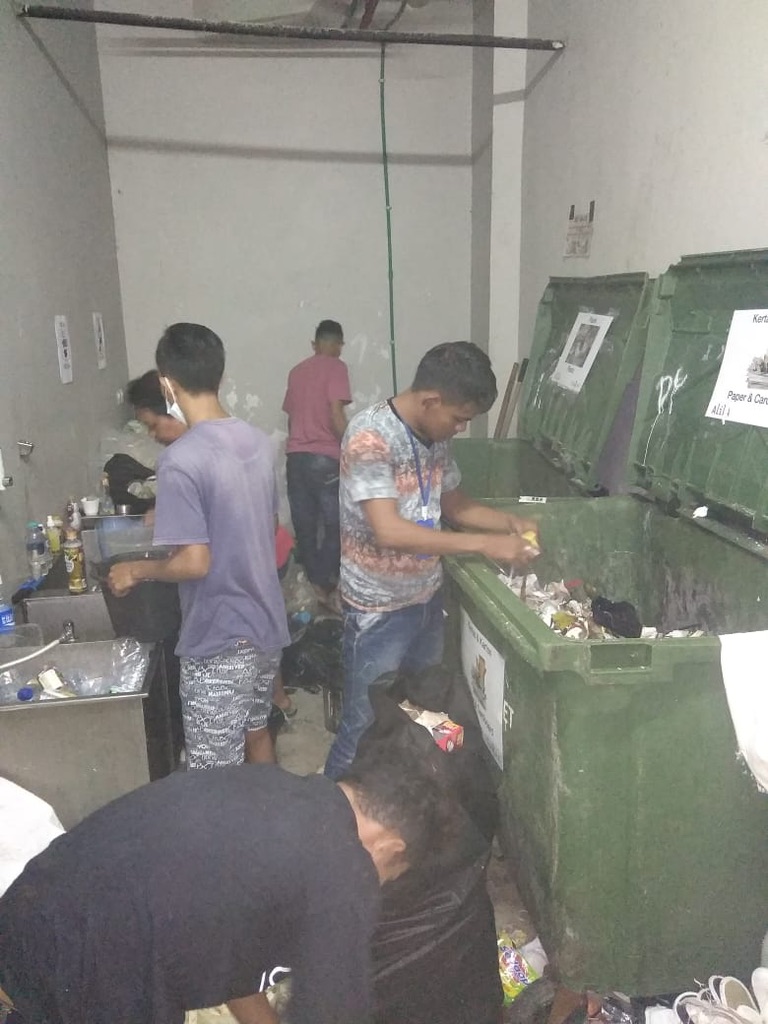
  • Image 15. Team sorting materials into large green bins indoors15
    15.Dry-stream sorting into labelled green bins.
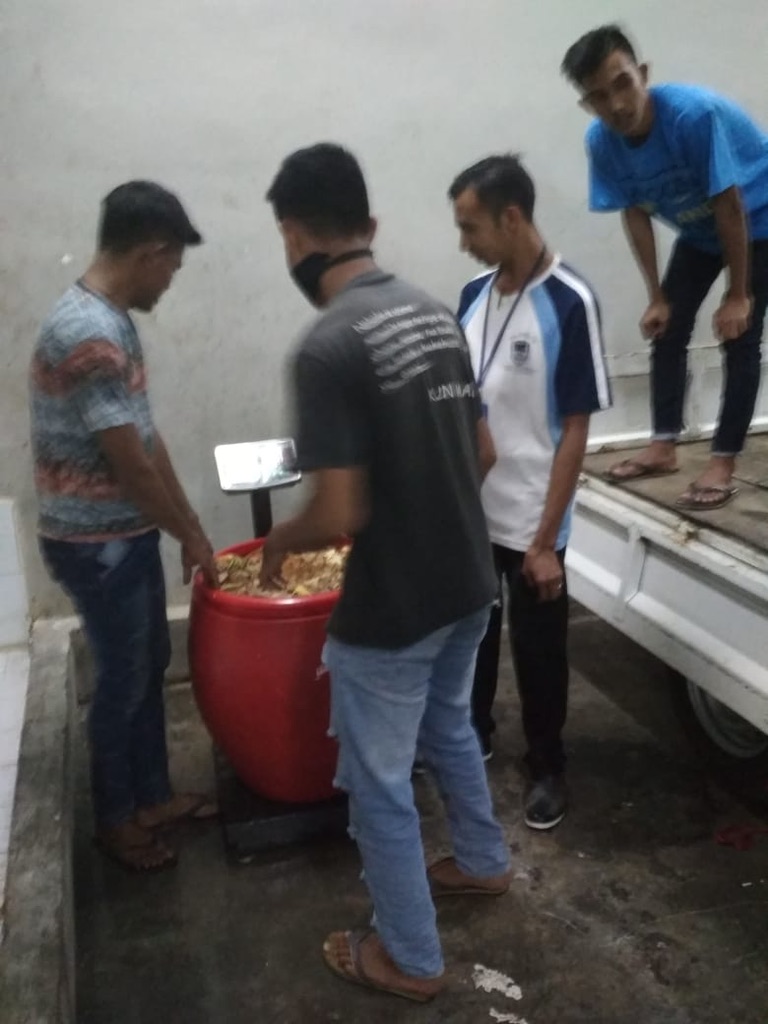
  • Image 16. Team weighing a large red tub of organic material on a floor scale16
    16.A red tub of organics on the scale before the load moves on.

Produce

Garden harvest, food and amenity outputs connected to property and local use.

Landscape· 2 · 2 across · nos. 17–18

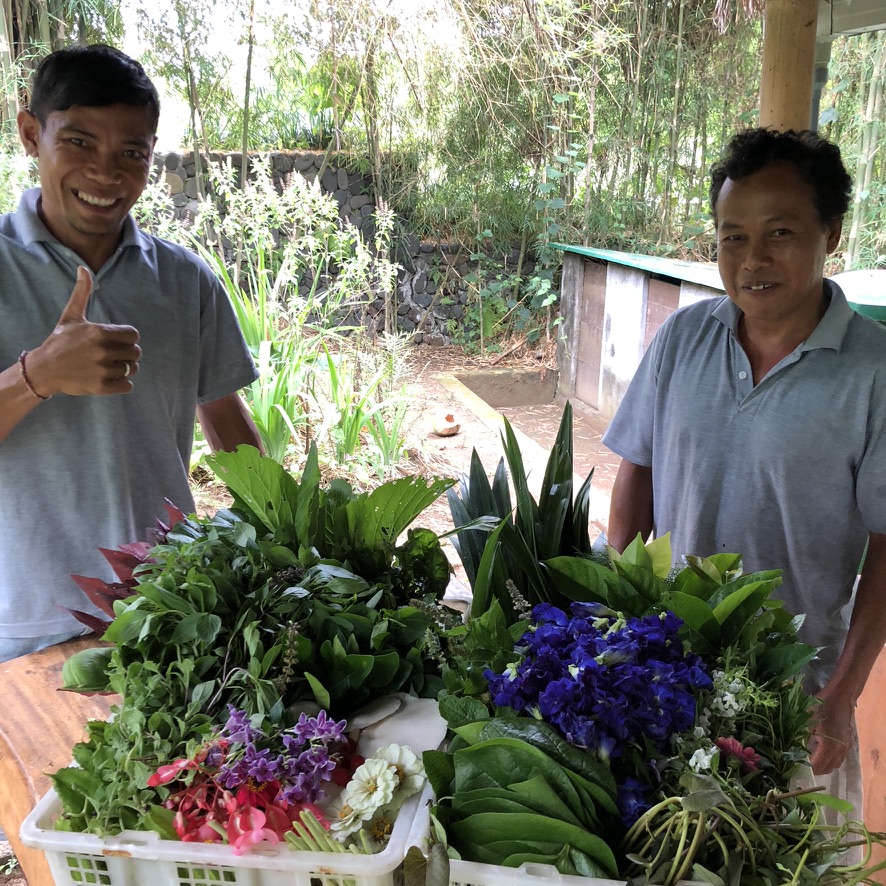
  • Image 17. Two people with crates of herbs, greens and blue flowers17
    17.Crates of herbs, greens and flowers ready for supply.
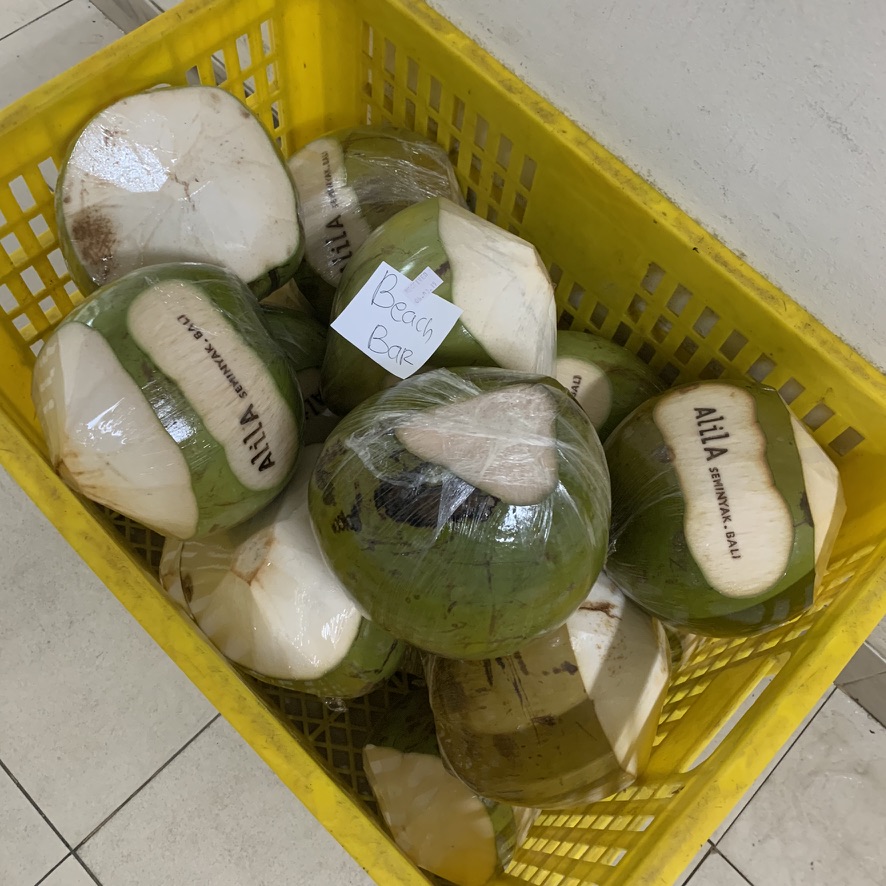
  • Image 18. Yellow crate of young coconuts branded Alila Seminyak, each wrapped in clear plastic film, with a Beach Bar note18
    18.An unknown problem: guests ordered coconuts to reduce waste, but branding them meant cling wrap so the mark would not oxidise — plastic packaging created by a well-meant choice. Unintended consequences.

Profile· 3 · 3 across · nos. 19–21

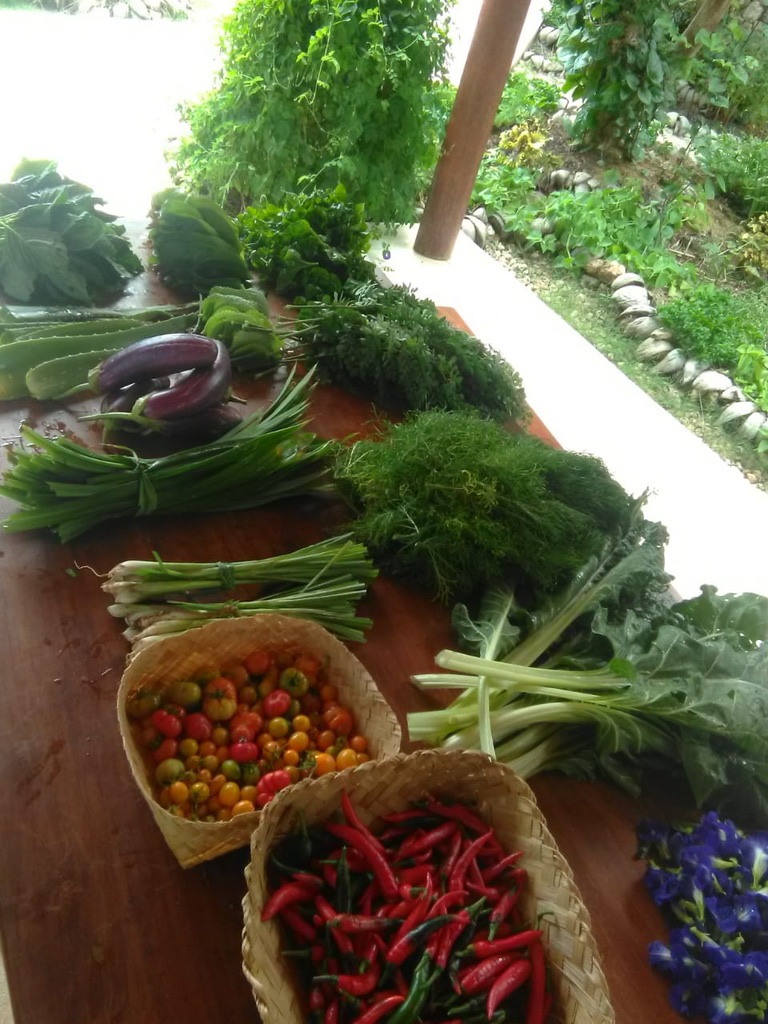
  • Image 19. Chillies, tomatoes, eggplant, fennel and greens on a wooden table19
    19.Fresh harvest laid out after picking: chillies, tomatoes, greens and herbs.
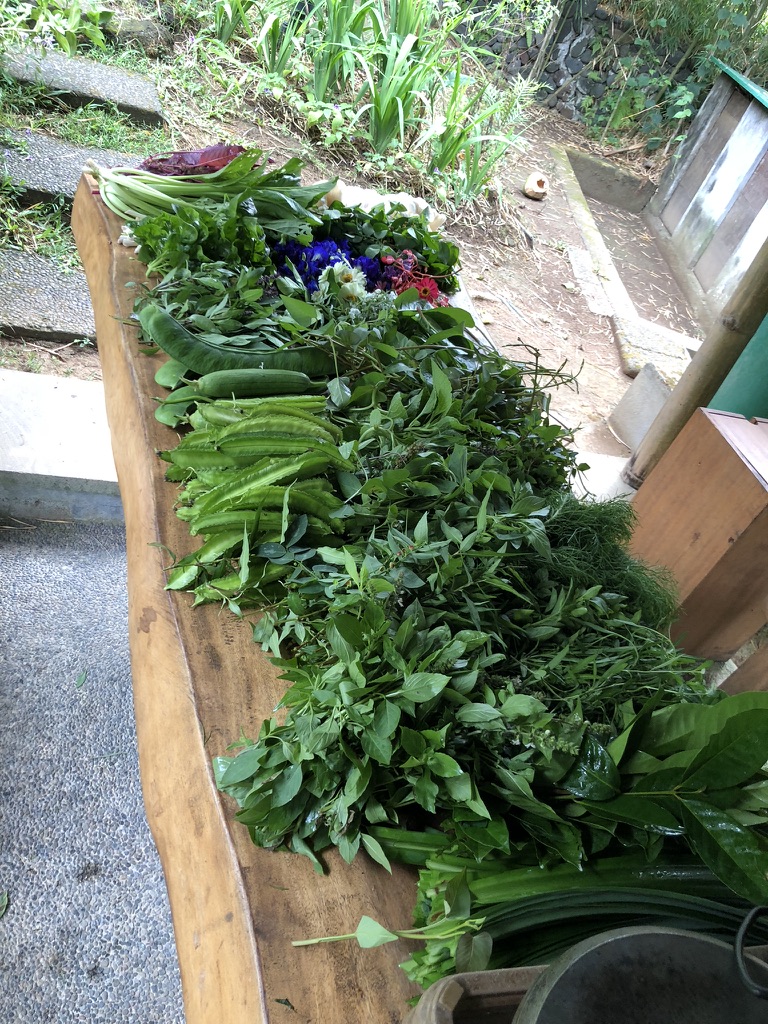
  • Image 20. Herbs, greens and flowers arranged on a wooden table20
    20.Mixed herbs and greens staged after harvest.
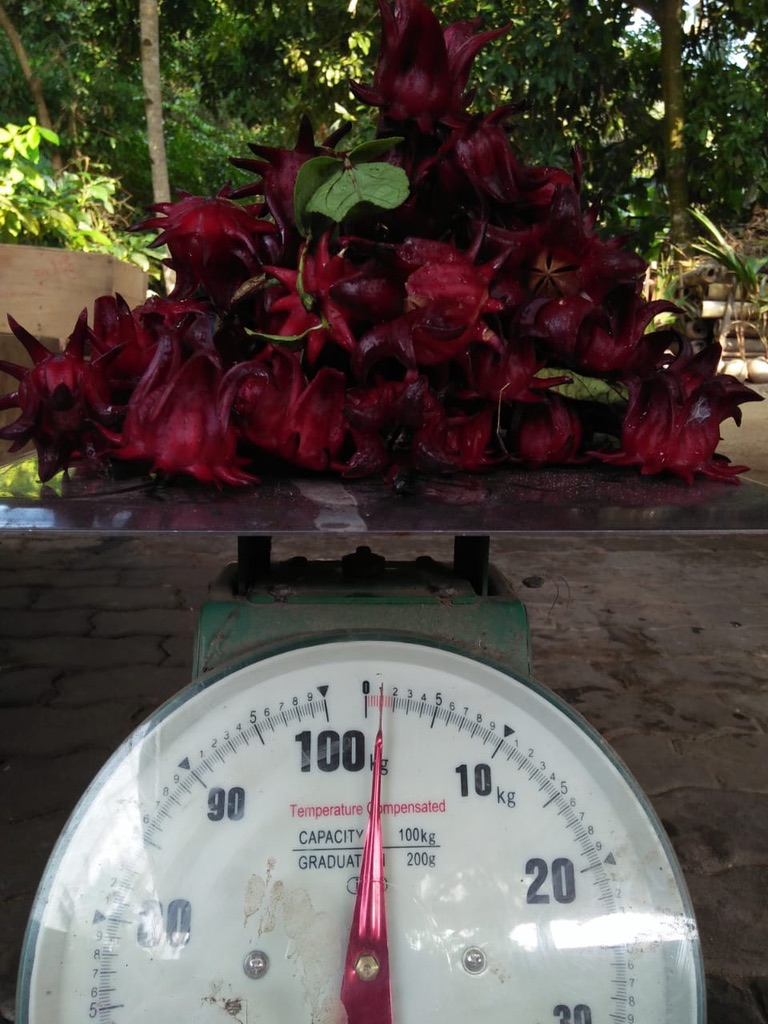
  • Image 21. Pile of red roselle calyces on a mechanical scale21
    21.Roselle weighed on a mechanical scale after harvest.

Production

Biological and material production: compost, feed, mushrooms and coir.

Landscape· 2 · 2 across · nos. 22–23

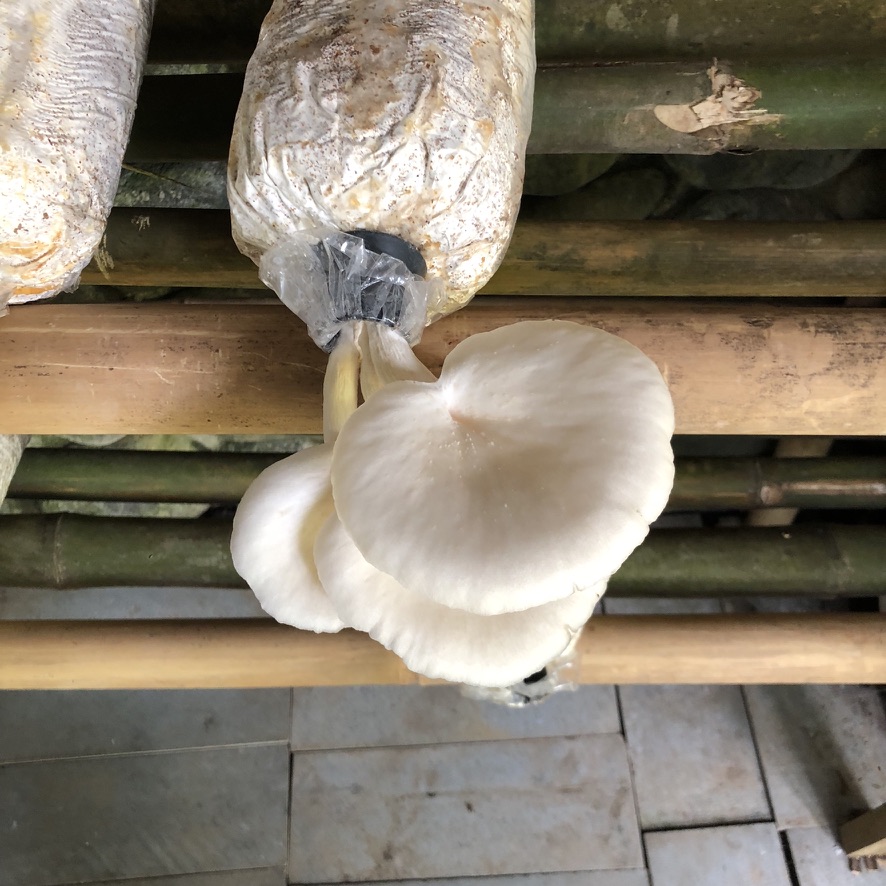
  • Image 22. Oyster mushrooms fruiting from bags on bamboo racks22
    22.Oyster mushrooms fruiting on cultivation bags.
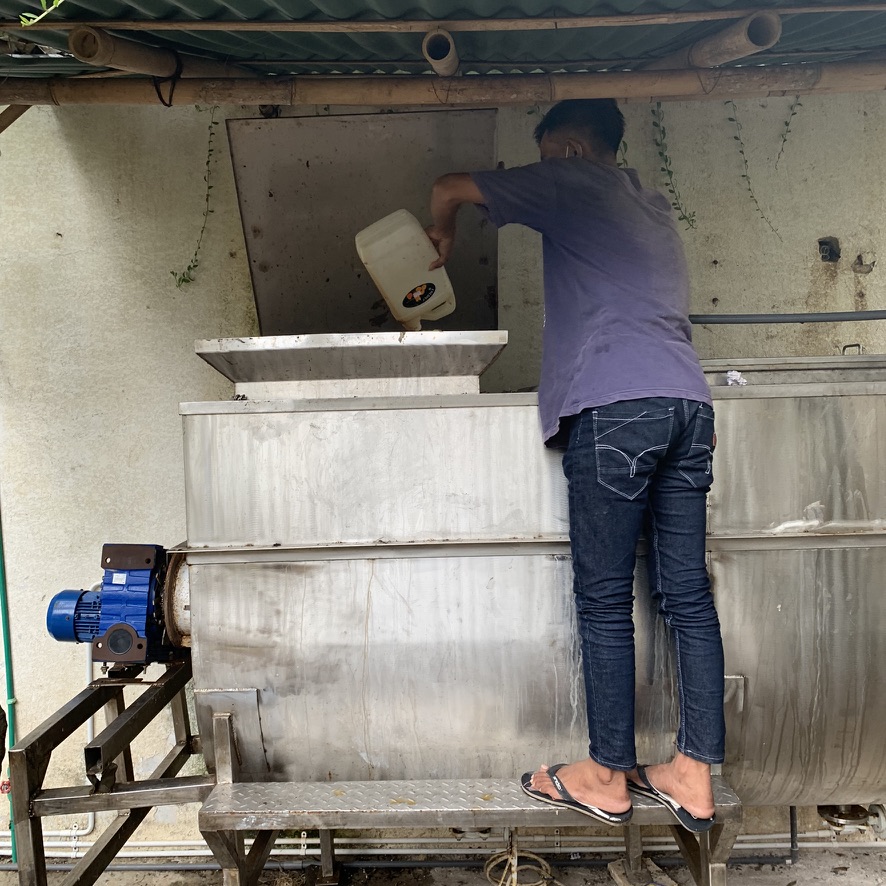
  • Image 23. Person pouring from a jerrycan into a large stainless steel organics machine23
    23.Feeding the stainless organics vessel during daily operation.

Profile· 3 · 3 across · nos. 24–26

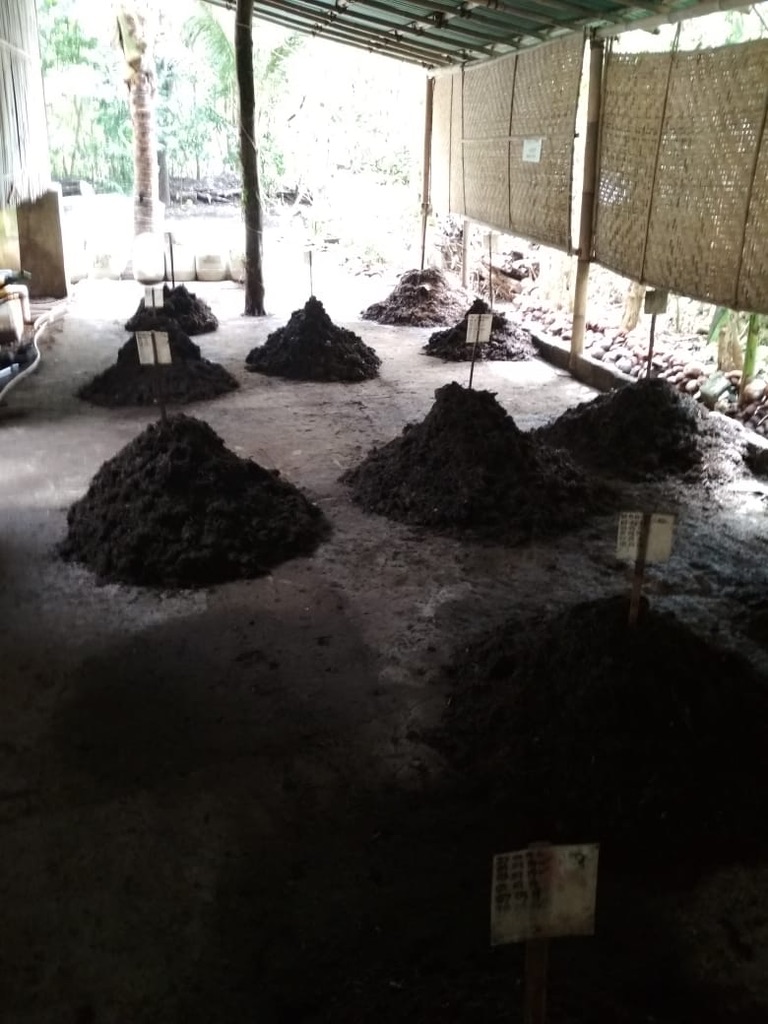
  • Image 24. Several labelled compost piles under a covered outdoor structure24
    24.Separate compost piles managed under cover.
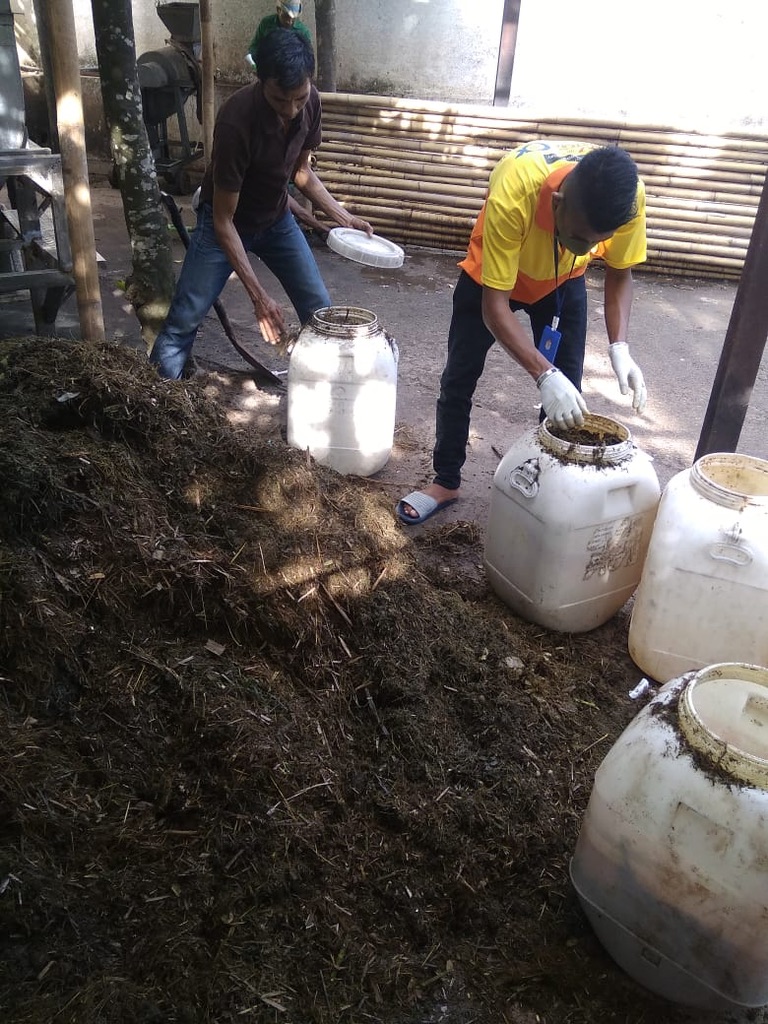
  • Image 25. People filling white drums from a large outdoor compost pile25
    25.Compost transferred into drums from the pile.
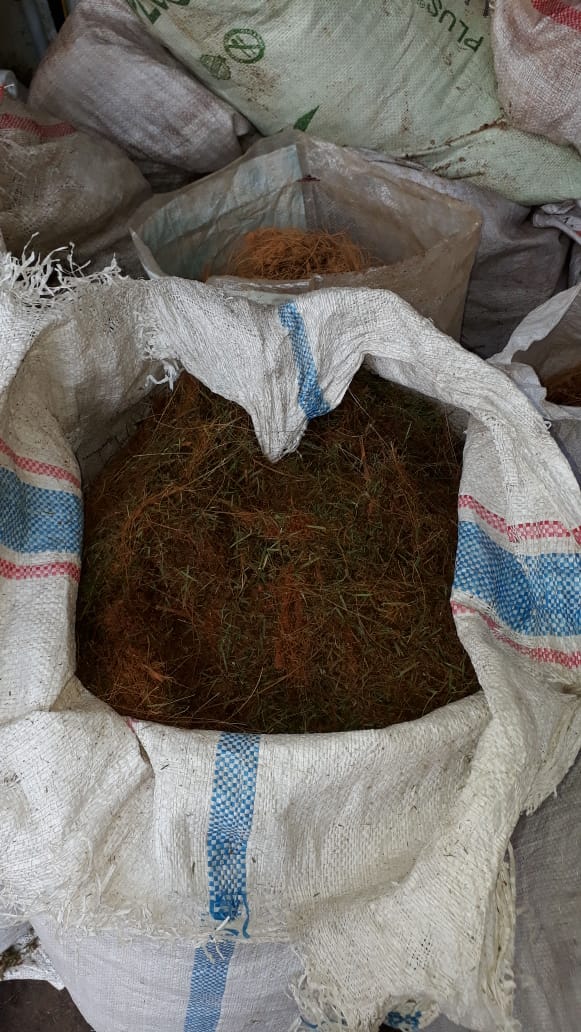
  • Image 26. Open woven sack filled with coconut coir and fibrous plant material26
    26.Coconut coir and fibre held in sacks after recovery.

Fabrication

Glass crush, cullet, casting and finished tiles as a short-loop product pathway.

Profile· 6 · 3 across · nos. 27–32

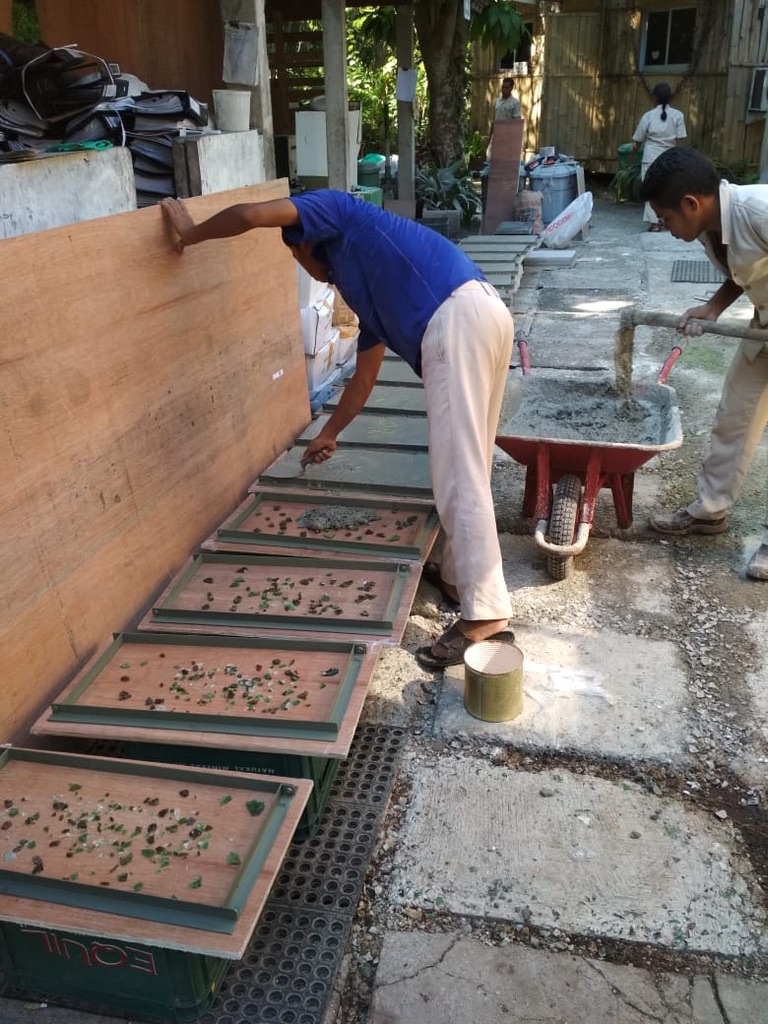
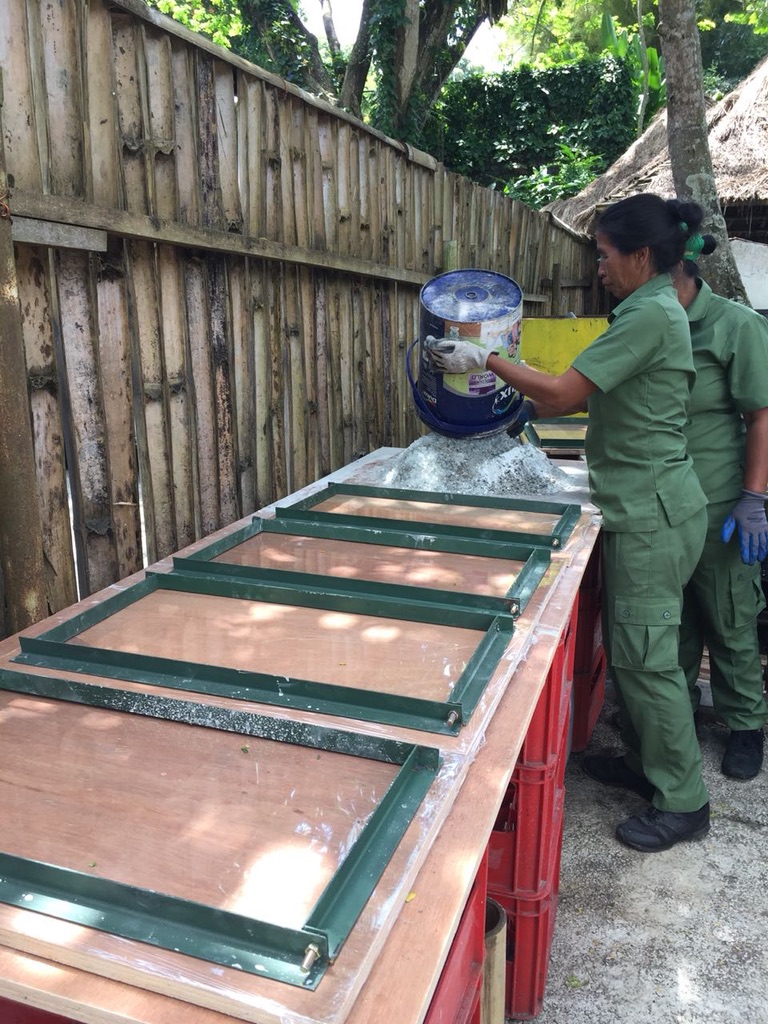
  • Image 27. Workers casting glass-aggregate tiles with green glass chips in moulds27
    27.Glass cullet cast into tile moulds with binder mix.
  • Image 28. Workers pouring aggregate mix into tile mould frames28
    28.Pouring mix into moulds during tile manufacture.
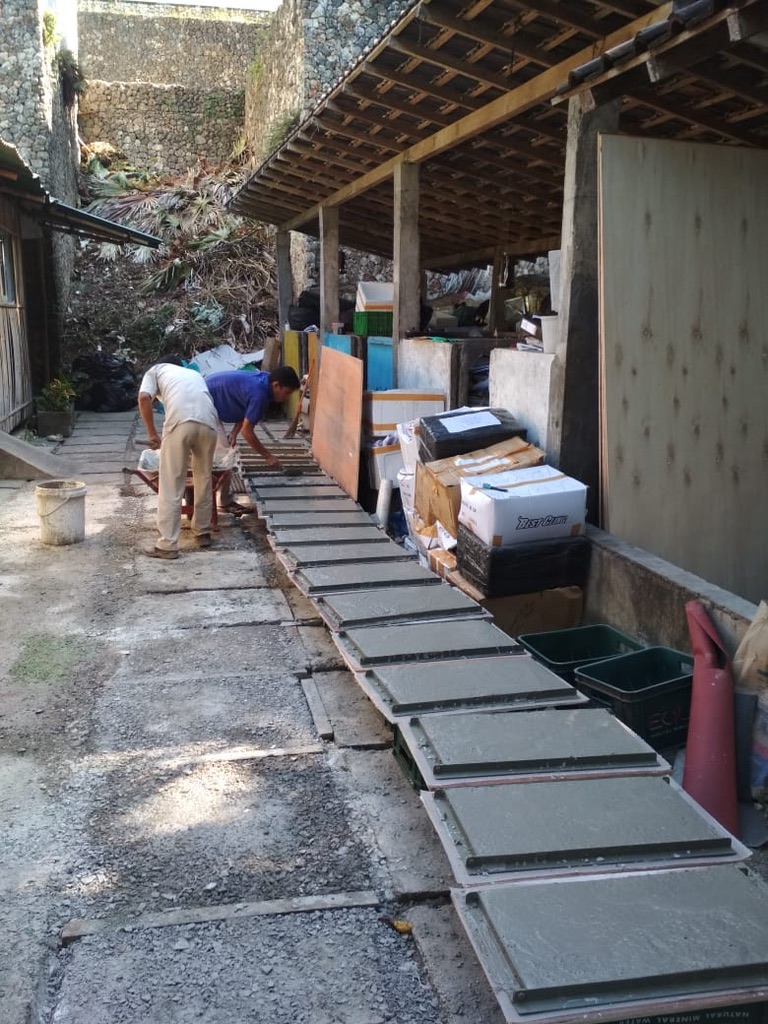
  • Image 29. Long outdoor row of freshly cast glass-concrete tiles curing under cover29
    29.Fresh tiles curing in a row under cover.
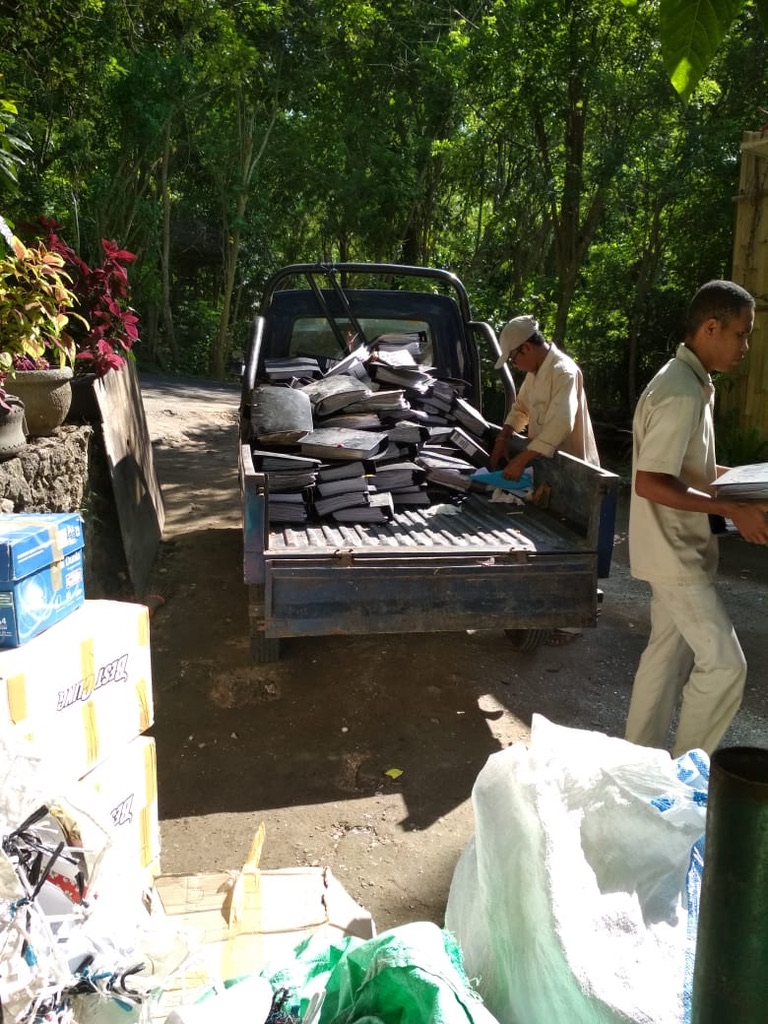
  • Image 30. Pickup truck loaded with stacks of glass-aggregate tiles30
    30.Finished tiles loaded on a pickup for despatch.
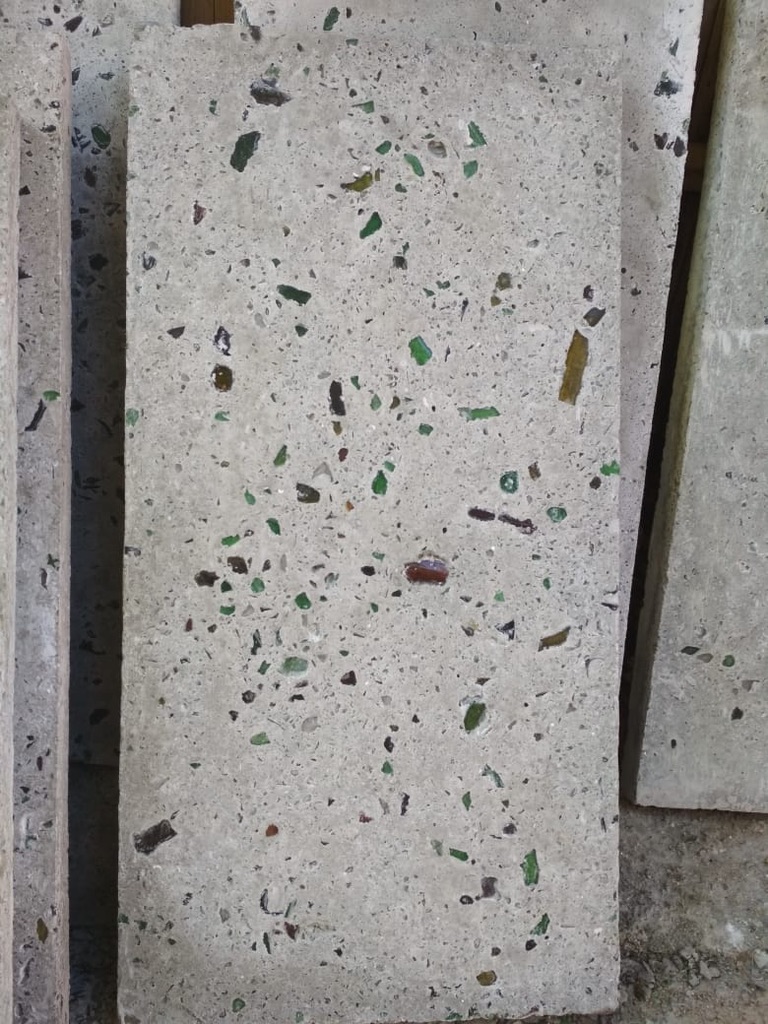
  • Image 31. Close-up of a concrete tile surface with embedded green and amber glass chips31
    31.Finished tile face with recovered glass chips visible in the surface.
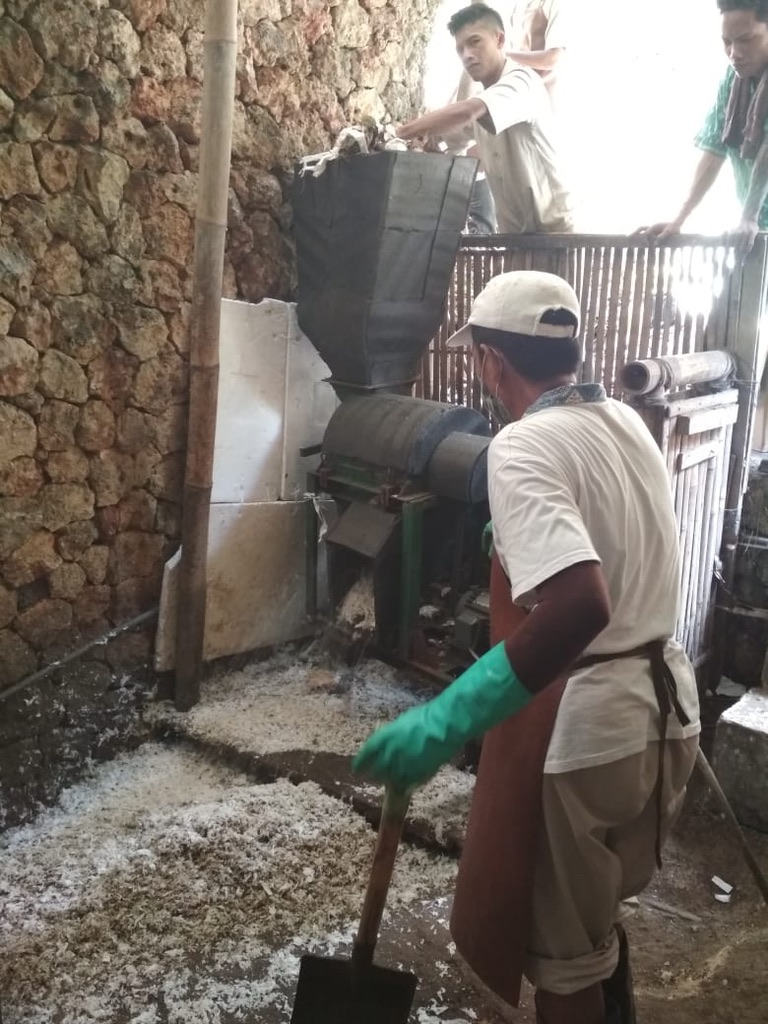
  • Image 32. Operators running a shredder with shredded plastic on the floor32
    32.Plastic shredder in operation with output on the floor.

Building

Containers, sheds and place-based infrastructure that hosted the operating system.

Landscape· 4 · 2 across · nos. 33–36

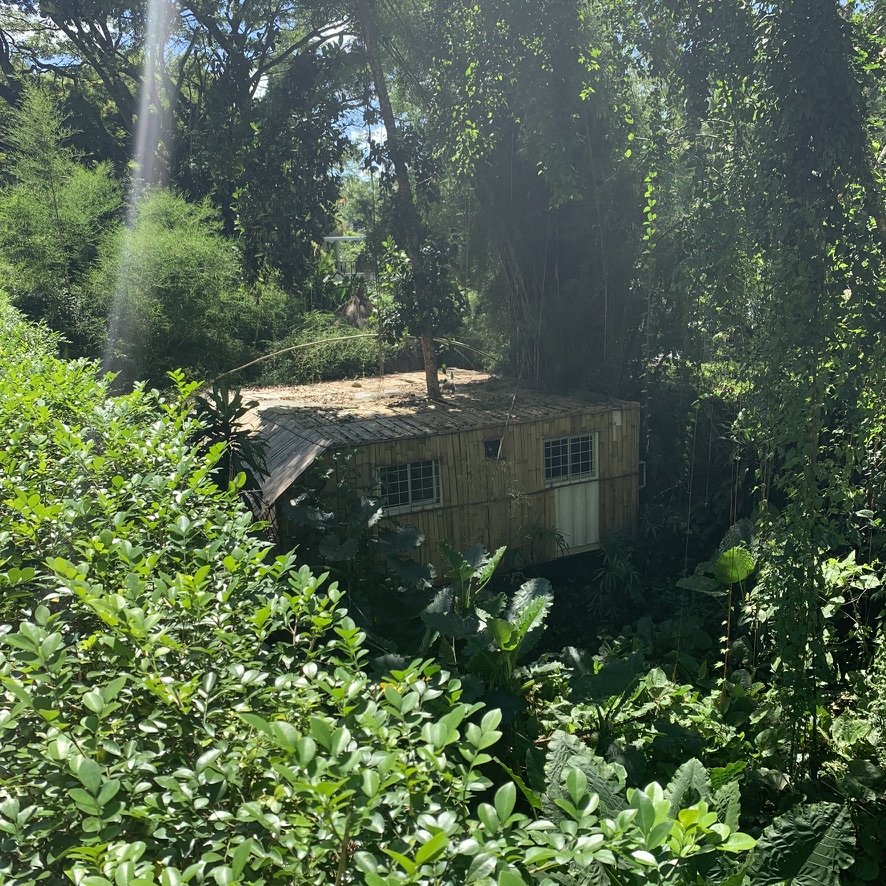
  • Image 33. Bamboo-clad elevated facility among dense greenery33
    33.Elevated facility clad in bamboo, set in dense vegetation.
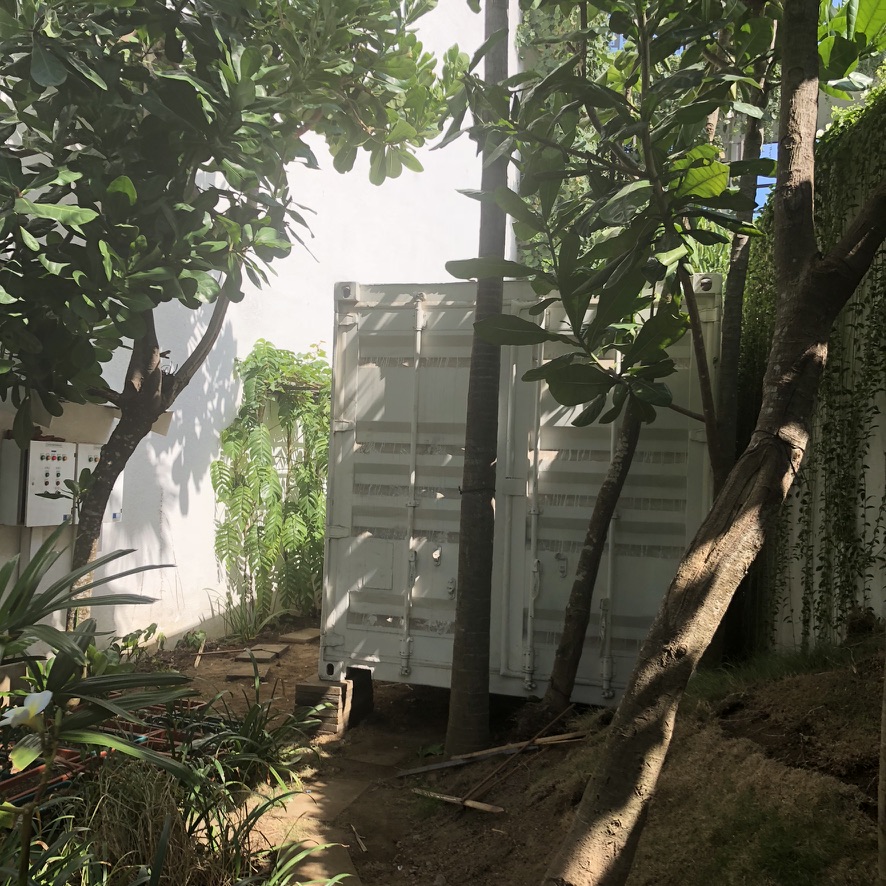
  • Image 34. White shipping container among trees on a property34
    34.Modified shipping container used as recovery space.
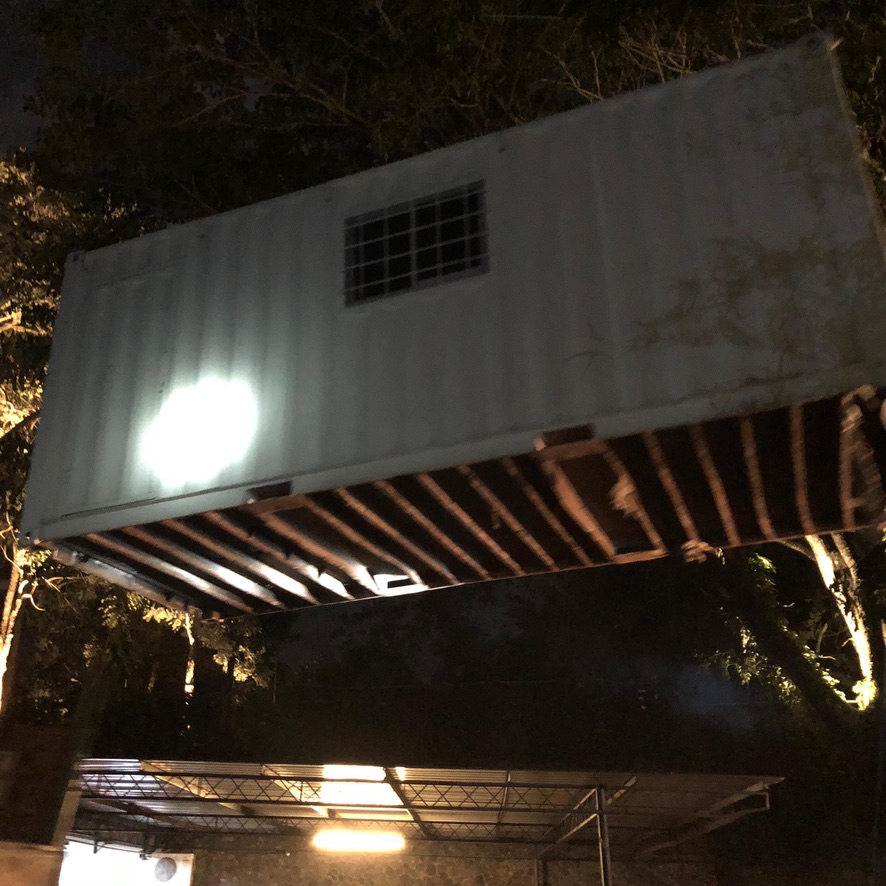
  • Image 35. Elevated white shipping container with exterior lighting at night35
    35.Container unit in use at night with external lighting.
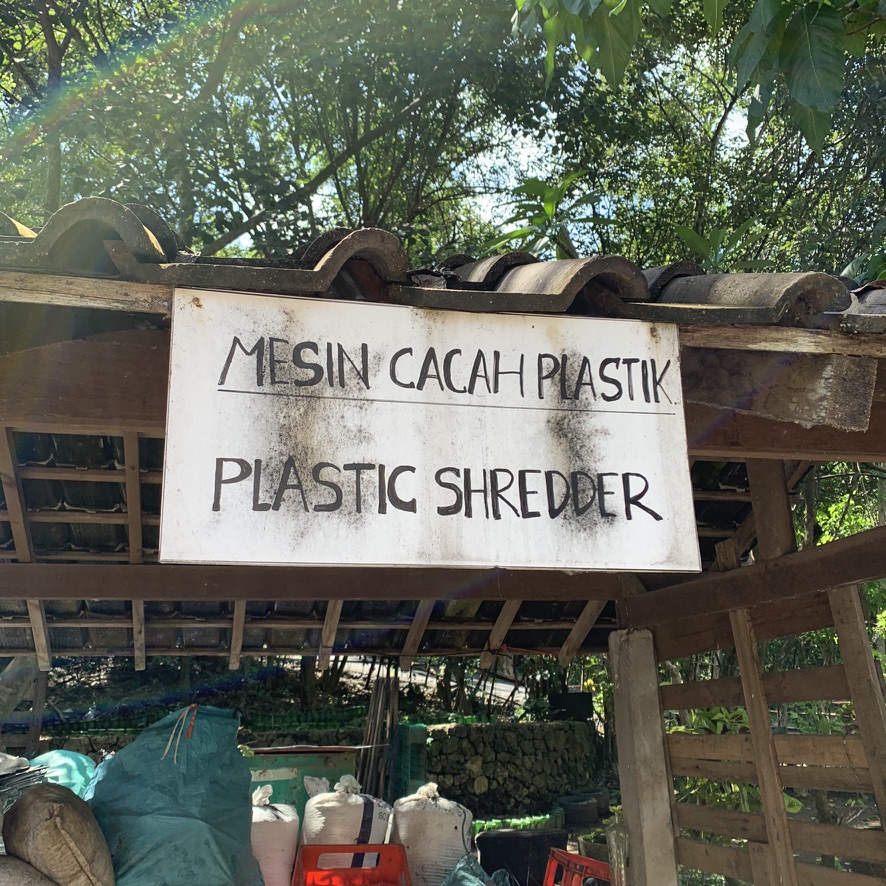
  • Image 36. Hand-painted sign Mesin Cacah Plastik Plastic Shredder above a covered bay36
    36.Plastic shredder bay labelled in Indonesian and English.

Maintaining

PPE, cleaning, repair and the ordinary work that keeps pathways safe and usable.

Profile· 3 · 3 across · nos. 37–39
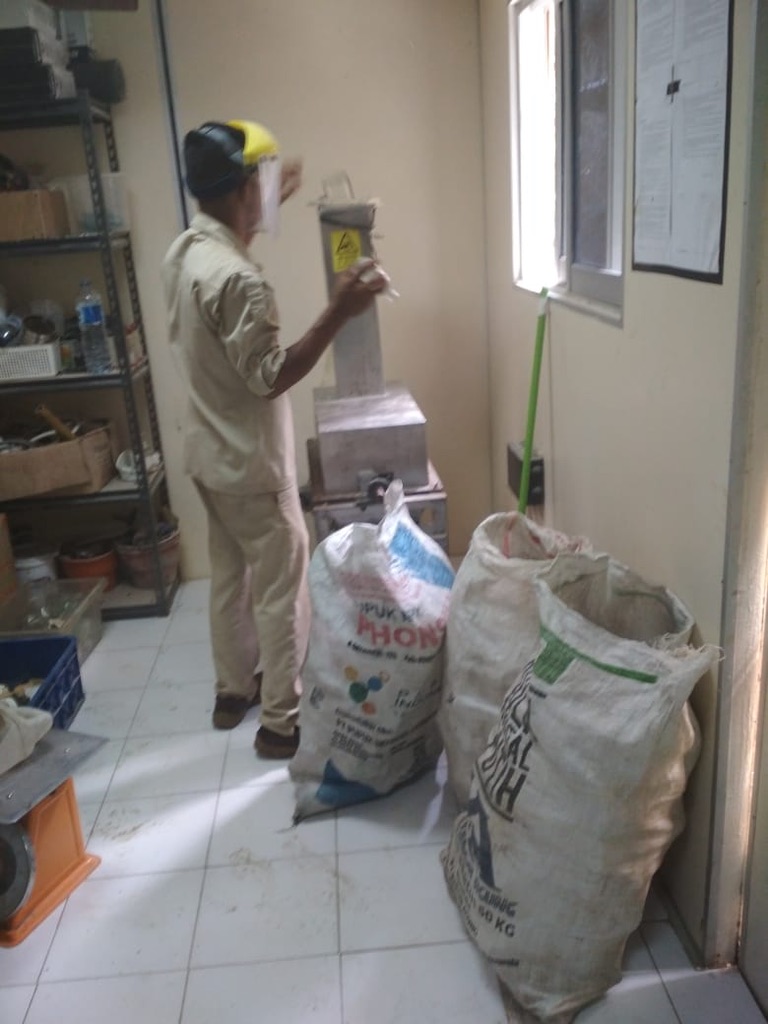
  • Image 37. Operator in face shield and ear protection at a glass crusher with filled sacks nearby37
    37.Glass crushing under PPE, with sacks of material staged beside the machine.
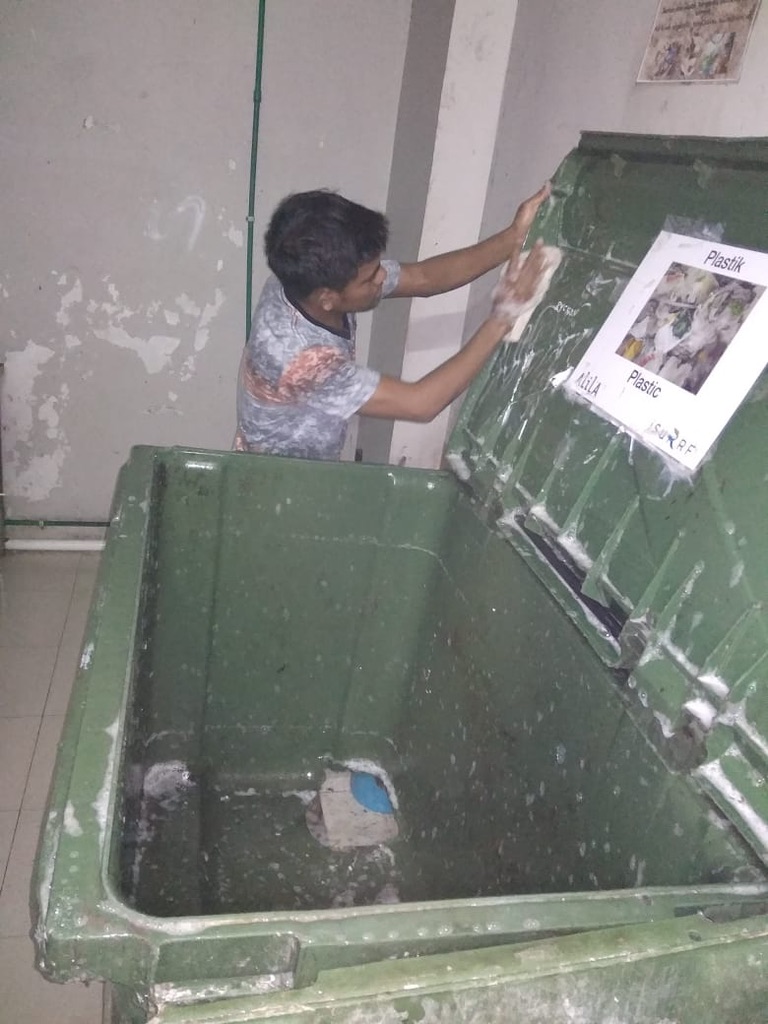
  • Image 38. Person washing a large green plastic bin with soap38
    38.Washing a plastic stream bin between uses.
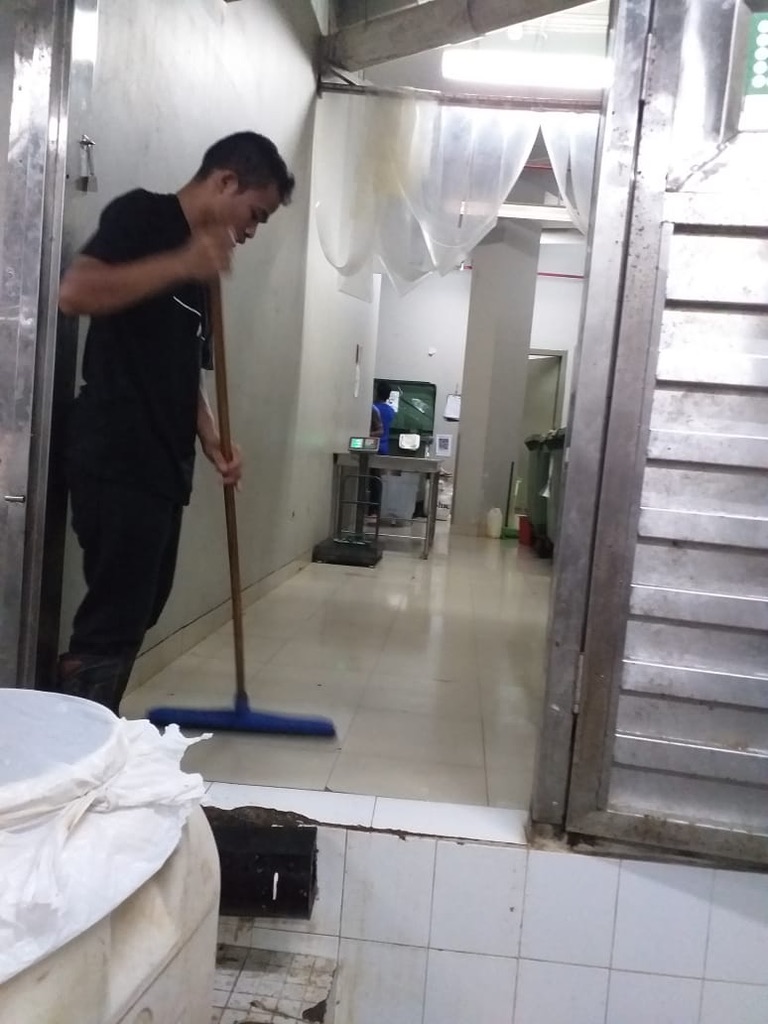
  • Image 39. Person mopping a tiled corridor in a recovery facility39
    39.Floor cleaning in the recovery work corridor.
Paperwork

Historical notas, logs and partner receipts. They document the earlier program era and do not alter iSuRRF™ 2026 product identity. Images are framed so document titles and headers stay visible.

Landscape· 2 · 2 across · nos. 40–41

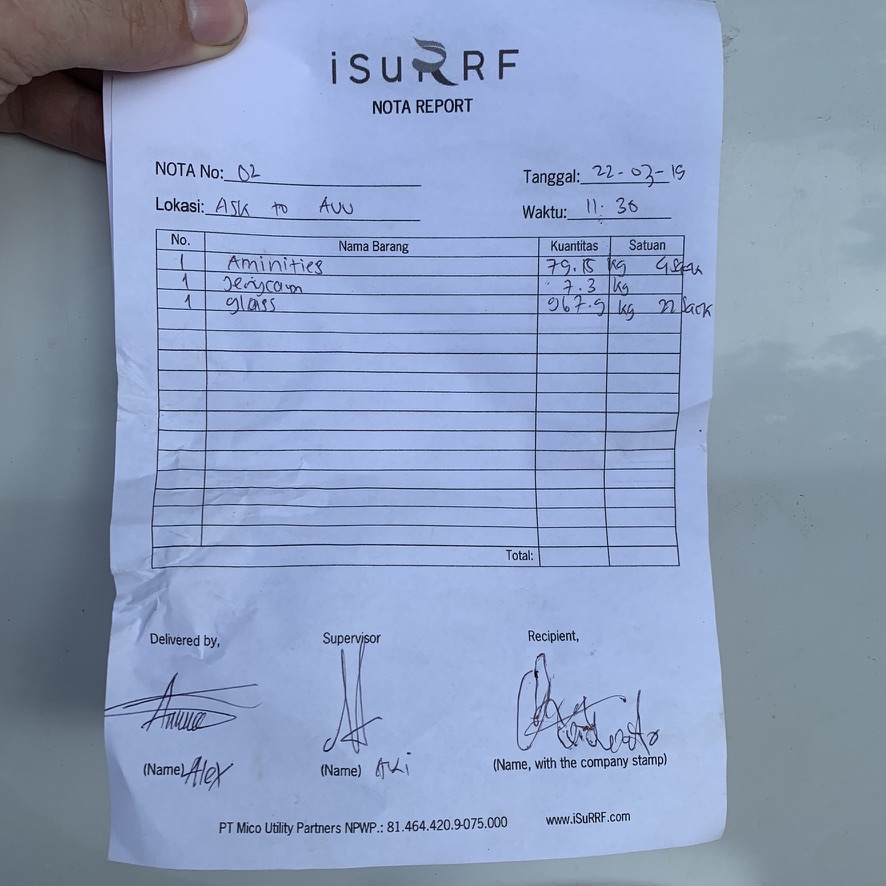
  • Image 40. iSuRRF Nota Report form dated 22 March 2019 for amenities, styrofoam and glass40
    40.iSuRRF Nota Report, 22 March 2019: amenities, styrofoam and glass (ASM to AVU).
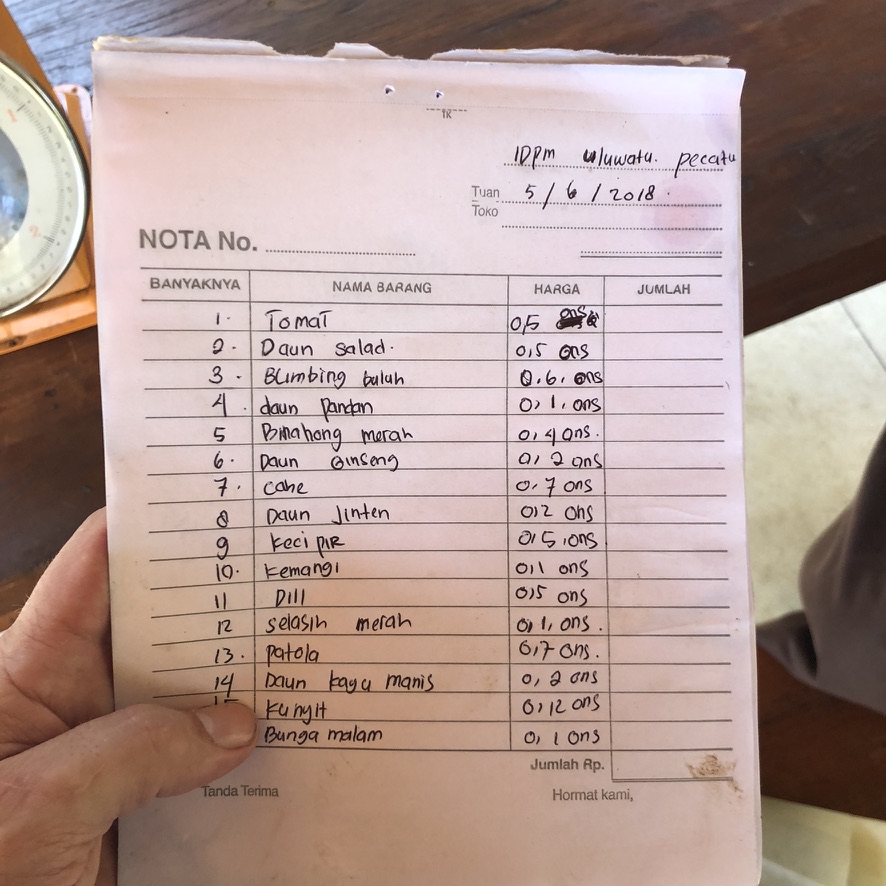
  • Image 41. Handwritten produce note dated 5 June 2018 with IDPM Uluwatu Pecatu header41
    41.Produce note, 5 June 2018, IDPM Uluwatu Pecatu: herbs and vegetables listed by item.

Profile· 6 · 3 across · nos. 42–47

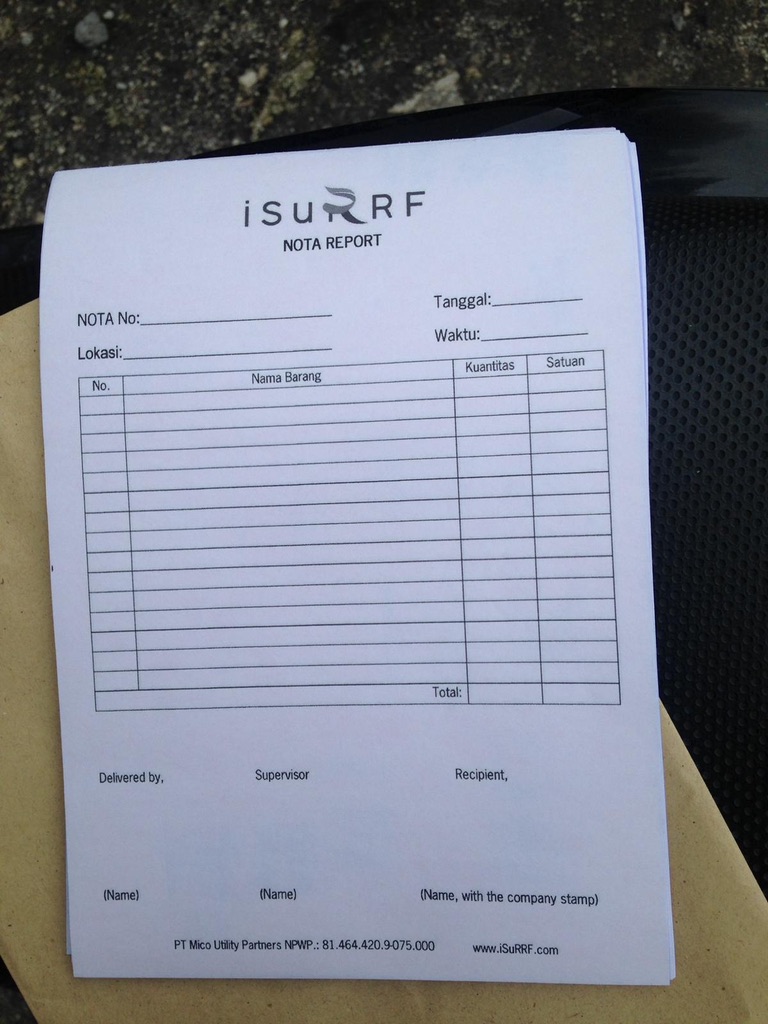
  • Image 42. Blank iSuRRF Nota Report form showing header fields for location and quantity42
    42.Blank iSuRRF Nota Report: location, materials, quantity and sign-off fields.
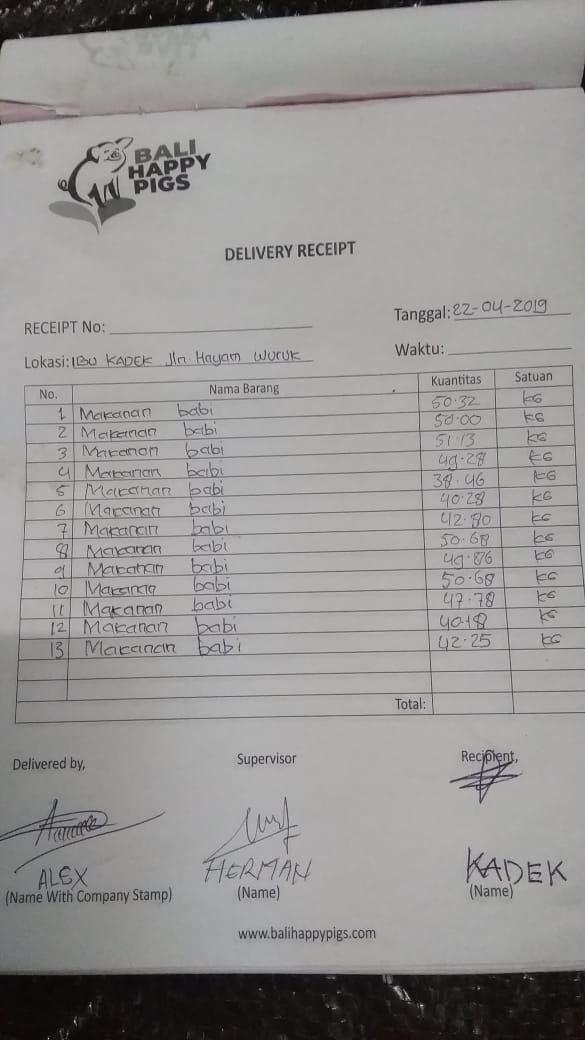
  • Image 43. Bali Happy Pigs delivery receipt with pig-feed line weights and signatures43
    43.Bali Happy Pigs (iSuRRF sub-brand) delivery receipt: pig feed (makanan babi) listed by weight with sign-off.
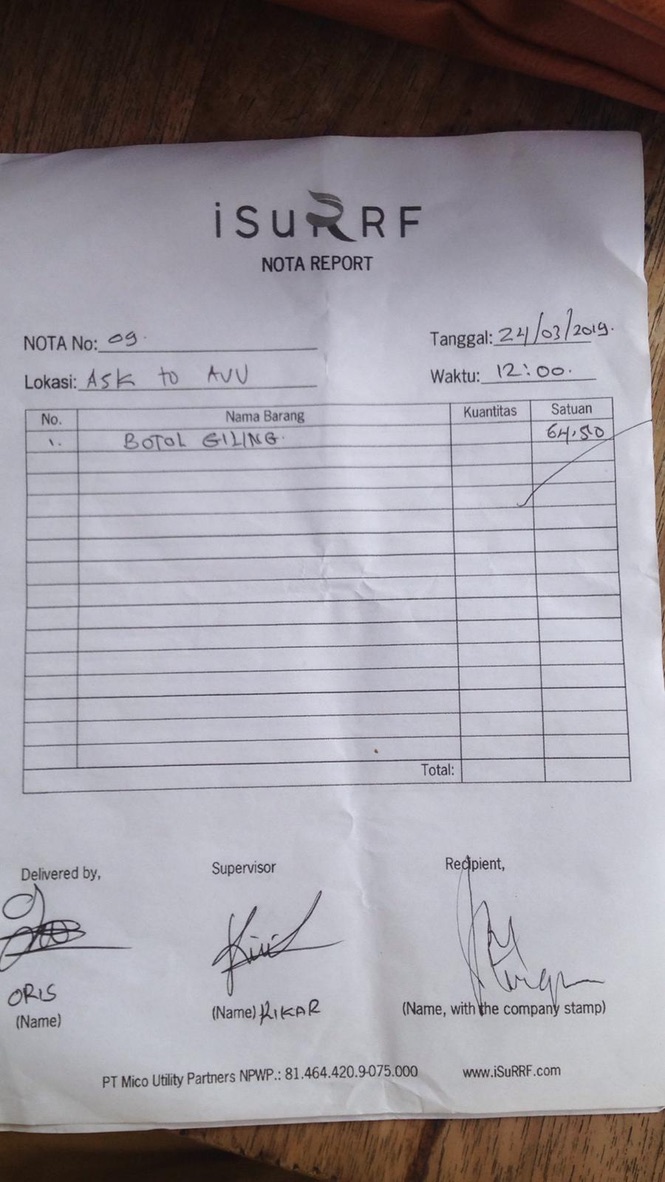
  • Image 44. iSuRRF Nota Report form dated 24 March 2019 for glass bottles44
    44.iSuRRF Nota Report, 24 March 2019: glass bottles (botol giling), ASK to AVU.
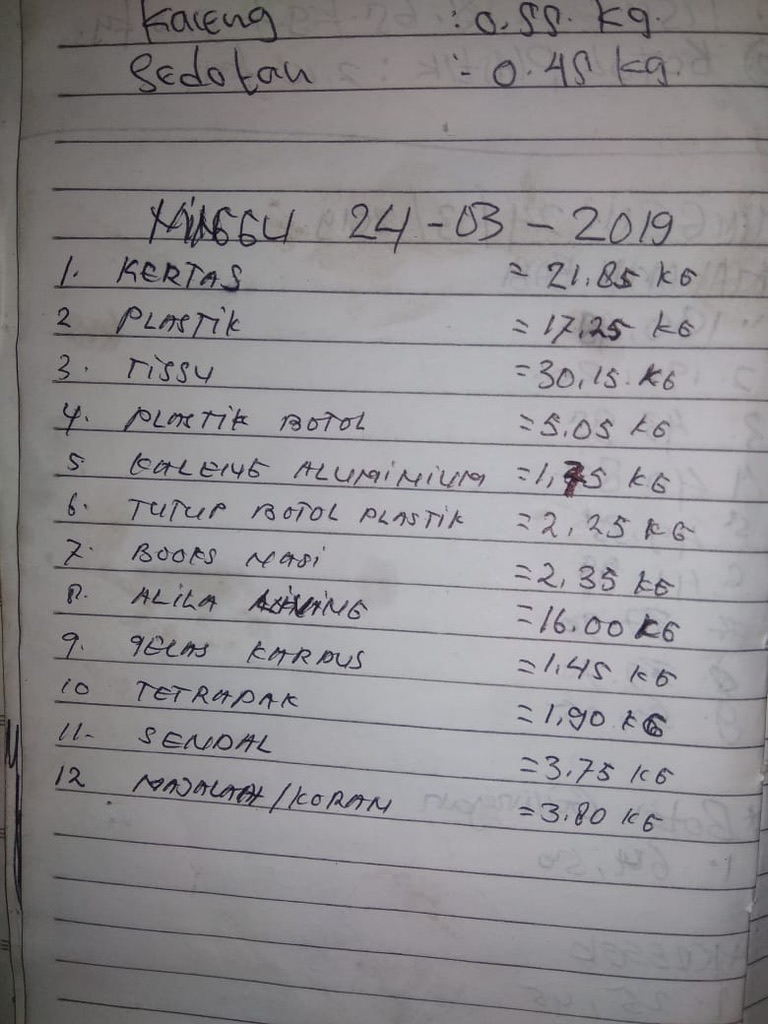
  • Image 45. Handwritten notebook log dated 24 March 2019 headed Manggis with stream weights45
    45.Notebook log, 24 March 2019, Manggis: paper, plastic, tissue and other streams by kg.
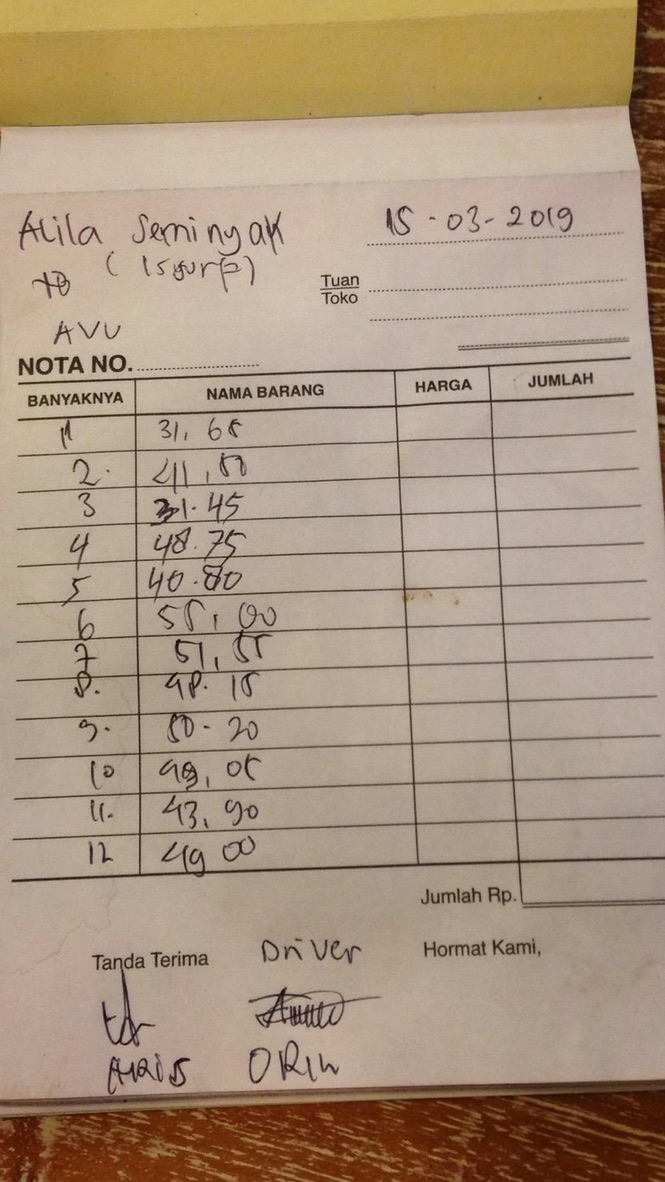
  • Image 46. Handwritten note headed Alila Seminyak dated 15 March 2019 with weight line items46
    46.Handwritten note, 15 March 2019, Alila Seminyak: numbered loads by weight.
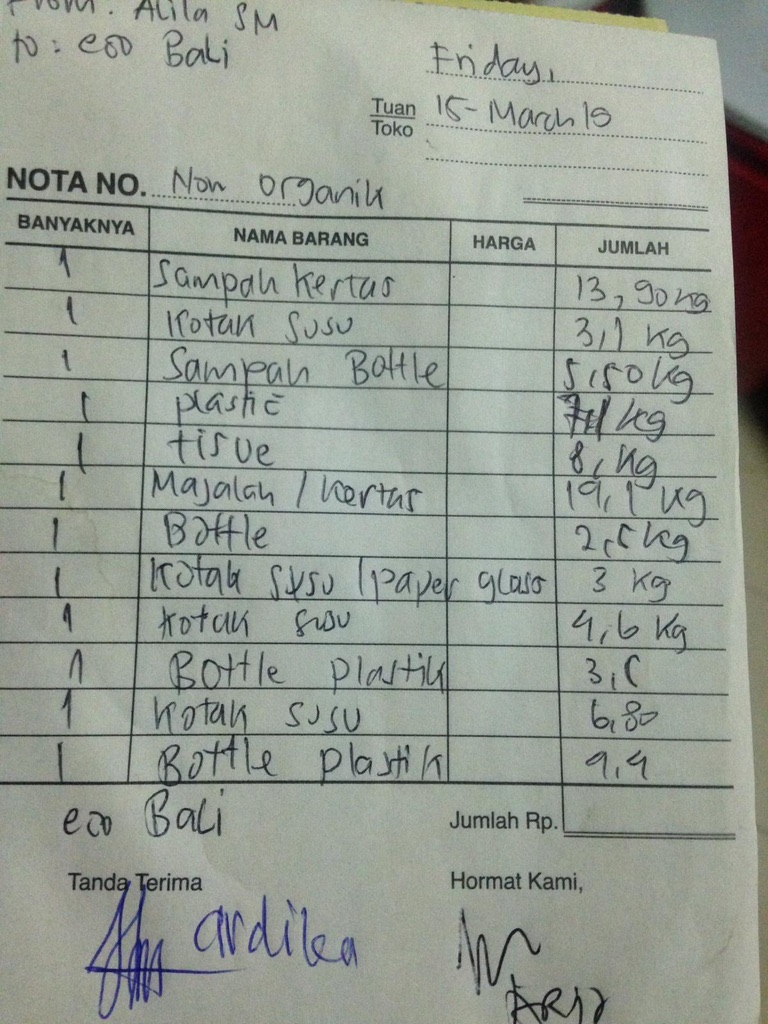
  • Image 47. Handwritten non-organic note dated 15 March 2019 listing paper bottles plastic tissue47
    47.Non-organic stream note, 15 March 2019: paper, bottles, plastic, tissue and related fractions.

Local partners and short loops

Farms, feed loops and community participation in the value created. Bali Happy Pigs was an iSuRRF sub-brand for the food-to-feed pathway, working with local husbandry rather than as a separate third-party brand.

Landscape· 2 · 2 across · nos. 48–49

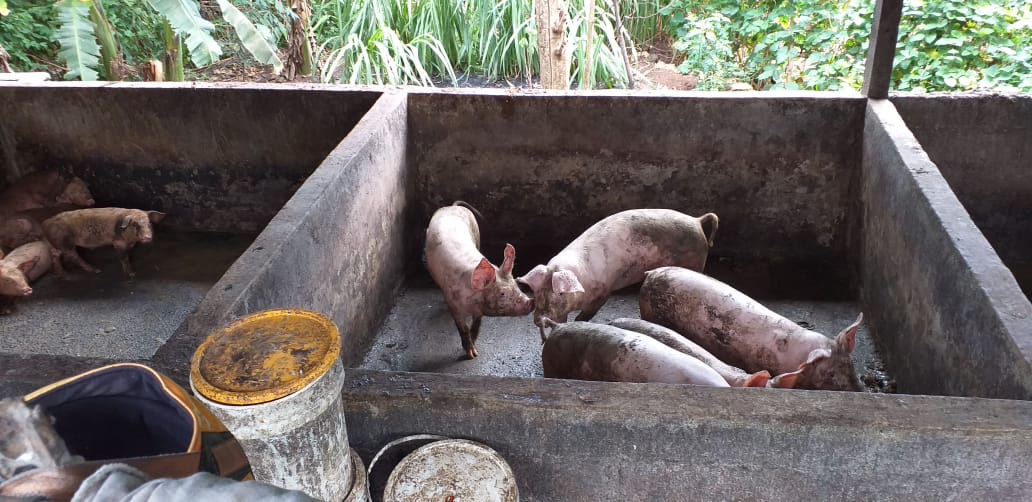
  • Image 48. Pigs in concrete pens under a simple shelter48
    48.Local pig pens on the food-to-feed short loop.
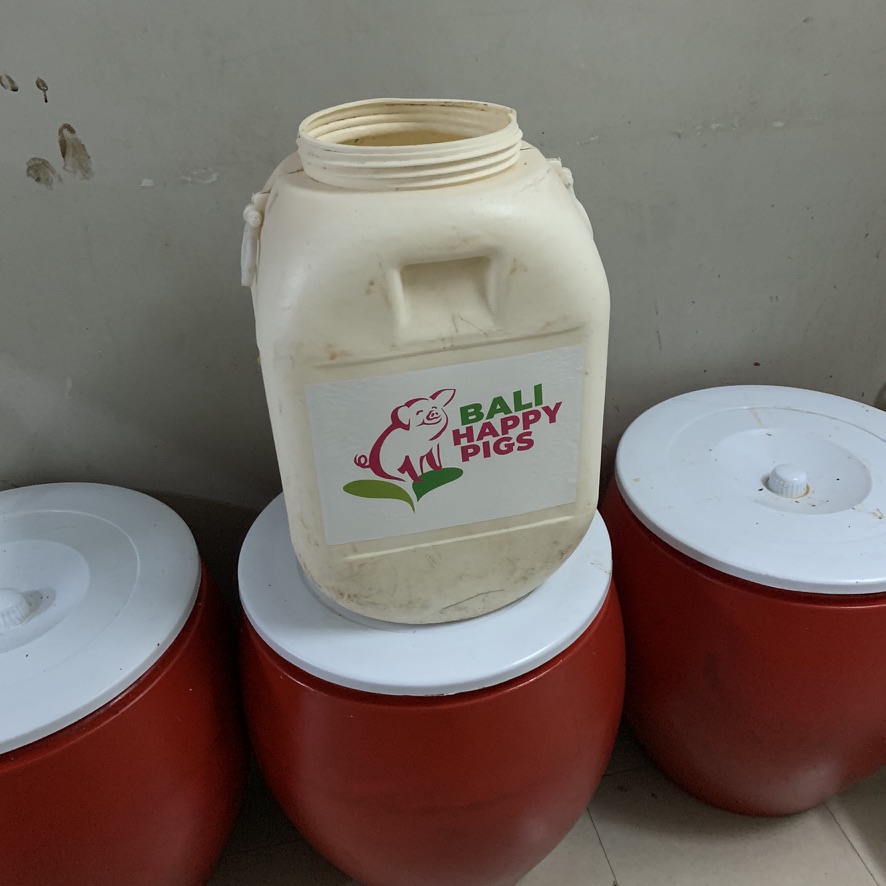
  • Image 49. White jerrycan labelled Bali Happy Pigs on a red tub49
    49.Bali Happy Pigs branding on the vessel — an iSuRRF sub-brand for the feed pathway.

Continue

Return to the founder account

The full narrative — Alila Zero Waste to Landfill, people, capability and iSuRRF™ 2026 — lives on the Our Journey page.